The Practical ANSI Translator
Translating ANSI machine safety concepts into practical risk reduction guidance manufacturers can apply.
ANSI B11 machine safety standards can be complex to interpret and even more challenging to apply in real manufacturing environments. The Practical ANSI Translator is designed to bridge that gap by explaining key machine safety concepts in clear, practical language that helps manufacturers better understand risk reduction, make more informed decisions, and apply safeguarding principles with greater confidence.
Each topic breaks down the safety objective behind the standard, translates it into real-world applications, and highlights practical considerations that can help improve machine safety discussions across engineering, maintenance, operations, and EHS teams.
Compliance tells you what to consider. Practical risk reduction helps determine how to apply it.
Schedule a call with a Safety Expert
Why We Created the ANSI Translator
Understanding a machine safety standard and successfully applying it are often two different challenges.
Many ANSI standards describe safety objectives and performance expectations but do not prescribe a single solution for every machine or manufacturing process. The Practical ANSI Translator was created to help bridge the gap between compliance concepts and practical implementation by translating common machine safety topics into clear, real-world guidance.
Whether you're evaluating an existing machine, planning a retrofit, or developing a corporate machine safety strategy, these practical explanations are intended to support better conversations and more informed decisions.
Who Is This Resource For?
The ANSI Translator is designed for professionals responsible for improving machine safety and reducing operational risk, including:
- Corporate EHS & Safety Directors
- Plant Safety Managers
- Manufacturing Engineers
- Controls Engineers
- Maintenance Managers
- Reliability Engineers
- Operations Managers
- Machine Builders & Integrators
What You'll Learn
Each ANSI Translator focuses on one practical machine safety concept, helping explain:
- Machine safeguarding principles
- Safety controls and operating modes
- Presence-sensing safeguarding
- Functional safety with integrated safety controls concepts
- Risk reduction strategies
- Safety Validation considerations
- Practical implementation examples with guarding and e-safety
- Common mistakes to avoid
You can watch previously recorded webinars on machine safety or register for future live machine safety training webinar sessions to help with the learning curve.
Browse ANSI Translators
Explore practical explanations of common ANSI machine safety concepts, translated into real-world risk reduction guidance for manufacturers.
Our ANSI translator library continues to grow as we publish more. Check back regularly for new topics.
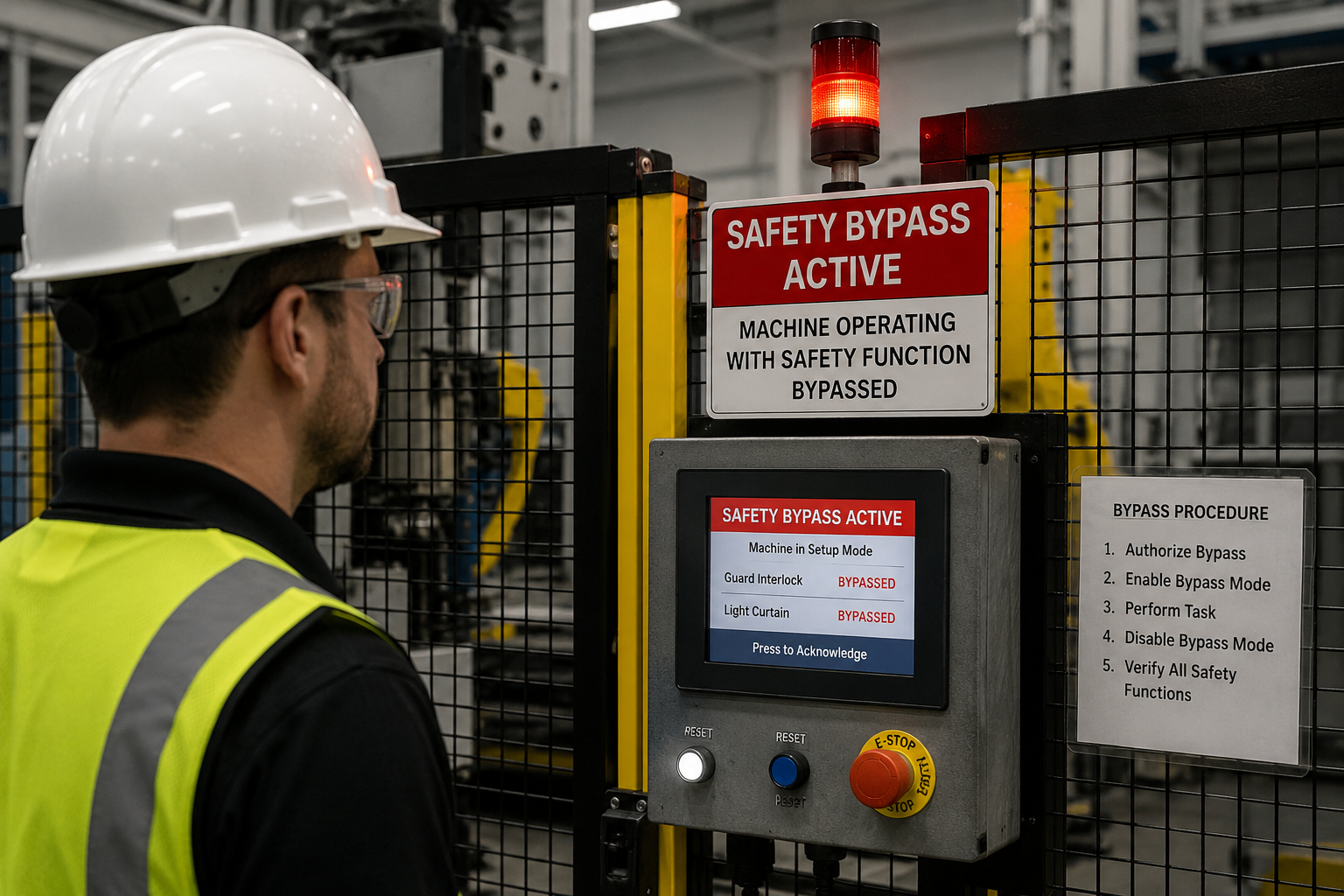
- ANSI Translator #001: Safety Bypass with Visual Notification
- ANSI Translator #002: Anti-Restart Protection for Machine Shop Equipment
- AKA: Drop out protection
- ANSI Translator #003: Emergency Stop Functions Explained
- ANSI Translator #004: Manual Reset Requirements
- ANSI Translator #005: Start/Stop Station Design & Placement
- ANSI Translator #006: Riveters & Machine Safeguarding Explained
- ANSI Translator #007: Spot Welders & Machine Safeguarding Explained
- ANSI Translator #008: Dust Collection for Machine Shop Equipment
- ANSI Translator #009: Light Curtains Explained – More Than an Invisible Beam
- ANSI Translator #010: Interlocked Guard Doors Explained
- ANSI Translator #011: Safety Laser Scanners Explained
How to Use the ANSI Translator
Every ANSI Translator follows the same format to make complex machine safety concepts easier to understand.
- The Standard: A high-level overview of the machine safety concept and its intended objective.
- The Practical Translation: What the concept looks like on real manufacturing equipment.
- Why it Matters: Understanding the impact on operators, maintenance personnel, and production.
- Common Mistakes: Examples of issues frequently encountered during assessments and retrofit projects.
- Questions to Ask Yourself: Practical questions to help evaluate your own equipment and processes.
- The Takeaway: A concise summary of the concept and its role in practical risk reduction.
Related Learning Resources
Expand your understanding with additional machine safety resources:
- Machine Safety Guides
- Machine Guarding Case Studies
- Machine Safety Toolkit
- On-Demand Webinars
- Risk Reduction Prioritization Program (RRPP)
- Machine Safety Assessment & Alignment Initiative (MSAI)
Frequently Asked Questions
Are these official interpretations of ANSI standards?
No. The ANSI Translator provides practical educational guidance to help manufacturers better understand common machine safety concepts. It is not an official interpretation of ANSI standards.
Do these Translators replace a risk assessment?
No. Every machine, process, and application is different. A machine-specific risk assessment remains the foundation for selecting and validating appropriate safeguarding measures.
Will every Translator reference an ANSI B11 standard?
When applicable, Translators identify relevant ANSI B11 standards or related safety guidance to provide context. Requirements vary depending on machine type, application, and the standards that apply.
Who writes these Translators?
The content is developed by PowerSafe Automation based on practical experience designing, integrating, installing, and validating machine safeguarding systems across a wide range of manufacturing industries.
Educational Disclaimer
The Practical ANSI Translator is intended to provide educational information that helps manufacturers better understand machine safety concepts and practical risk reduction strategies. It is not a substitute for reviewing applicable standards, performing a machine-specific risk assessment, or obtaining professional engineering advice. Always consult the applicable ANSI, OSHA, NFPA, and other relevant standards for your specific equipment and application.
You can also check out our knowledge hub and blogs.

At PowerSafe Automation, my focus is on delivering turnkey machine safety and automation solutions through practical, engineered risk reduction. Our team provides machine guarding, electronic safety, assessments, controls integration, validation, ergonomic solutions, and mechanical and controls automation. https://www.linkedin.com/in/safetyshawnmantel/