Machine Stop-Time & Safety Distance Verification
Will your machine stop before reaching the hazard?
Presence-sensing devices only protect your operators when they're positioned based on actual machine performance, not assumptions.
Potential Risk in Your Safety Systems
Presence-sensing devices like safety light curtains are designed to stop a machine when their sensing field is interrupted, preventing injury. But they only work effectively when properly positioned and calibrated based on actual machine performance data.
Why Manual Testing Falls Short
When companies measure stop time internally, they typically use a phone or a stopwatch. They get a number that seems reasonable or “accurate”, and assume the guard is fine. If your safety devices are positioned based on incorrect stop time data, they could fail to protect your operators and put them at risk of serious injury.
- Human reaction time can't capture the precise moment of actuation with a traditional stopwatch.
- Without calibrated measuring equipment, you're estimating safety data that determines if your guards actually protect operators.
- Inaccurate stop times can make a guard appear compliant when it's actually not providing enough distance from the hazard.
Our Stop-Time Measurement Approach
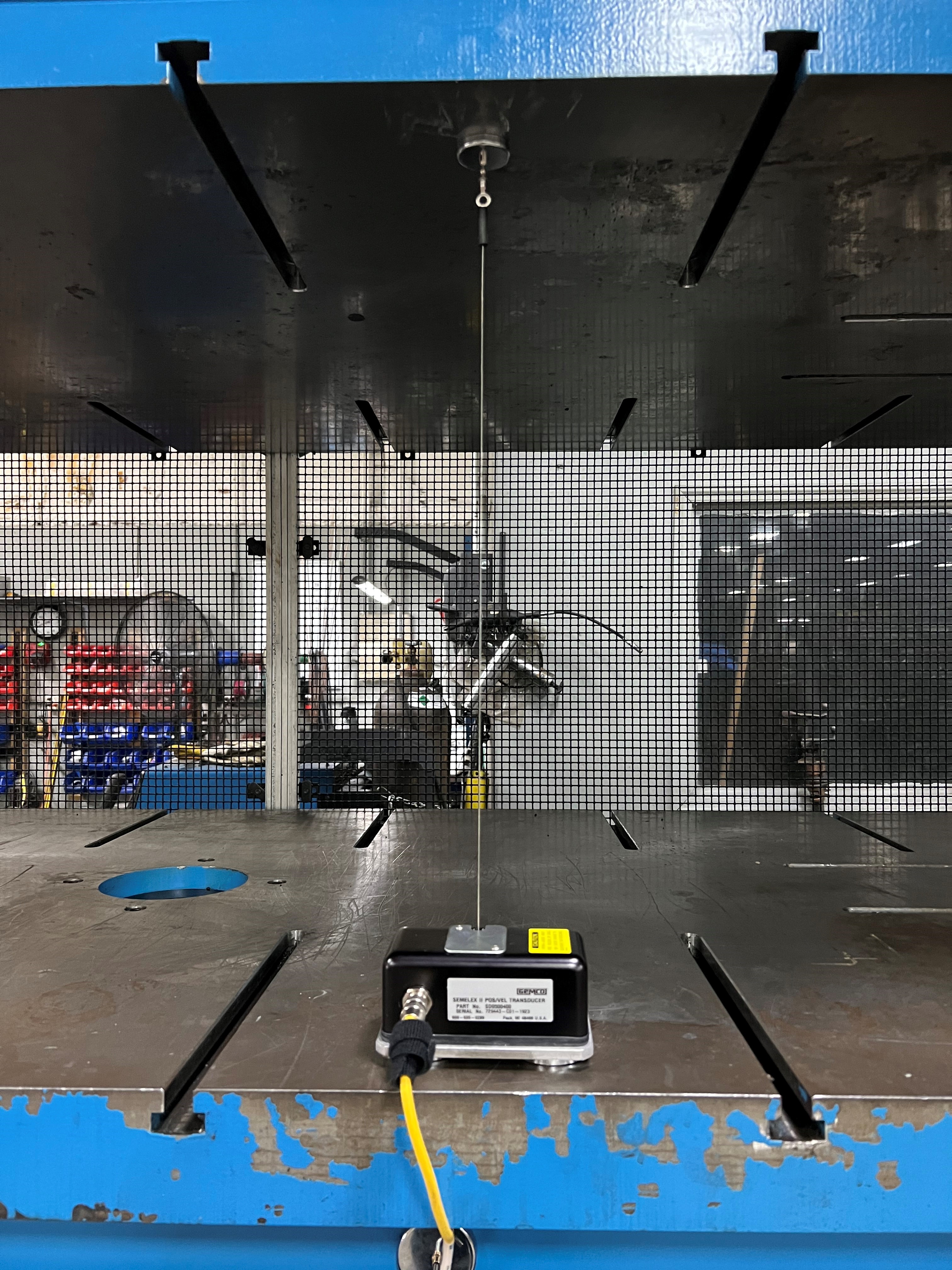
Our calibrated stop-time measuring device precisely detects the moment a safety device is actuated and the exact point when motion fully stops on equipment such as presses. We activate the safety device exactly as it’s used in production and capture multiple stop events to ensure consistent, repeatable results. To further validate performance on other equipment, we also conduct timed video analysis, providing a clear, visual confirmation of actual stopping behavior in real-world conditions.
- Every measurement is documented, providing defensible evidence for OSHA inspections and audits.
- Our sensors measure with millisecond-level precision.
- We test under actual production conditions to capture true stopping performance.
We measure against OSHA 1910.217 regulations & ANSI B11 machine safety standards.
How the Assessment Works
- Discovery Call
- We start with a virtual call to understand your scope of work and collect an asset list of machines to be tested.
- On-Site Review
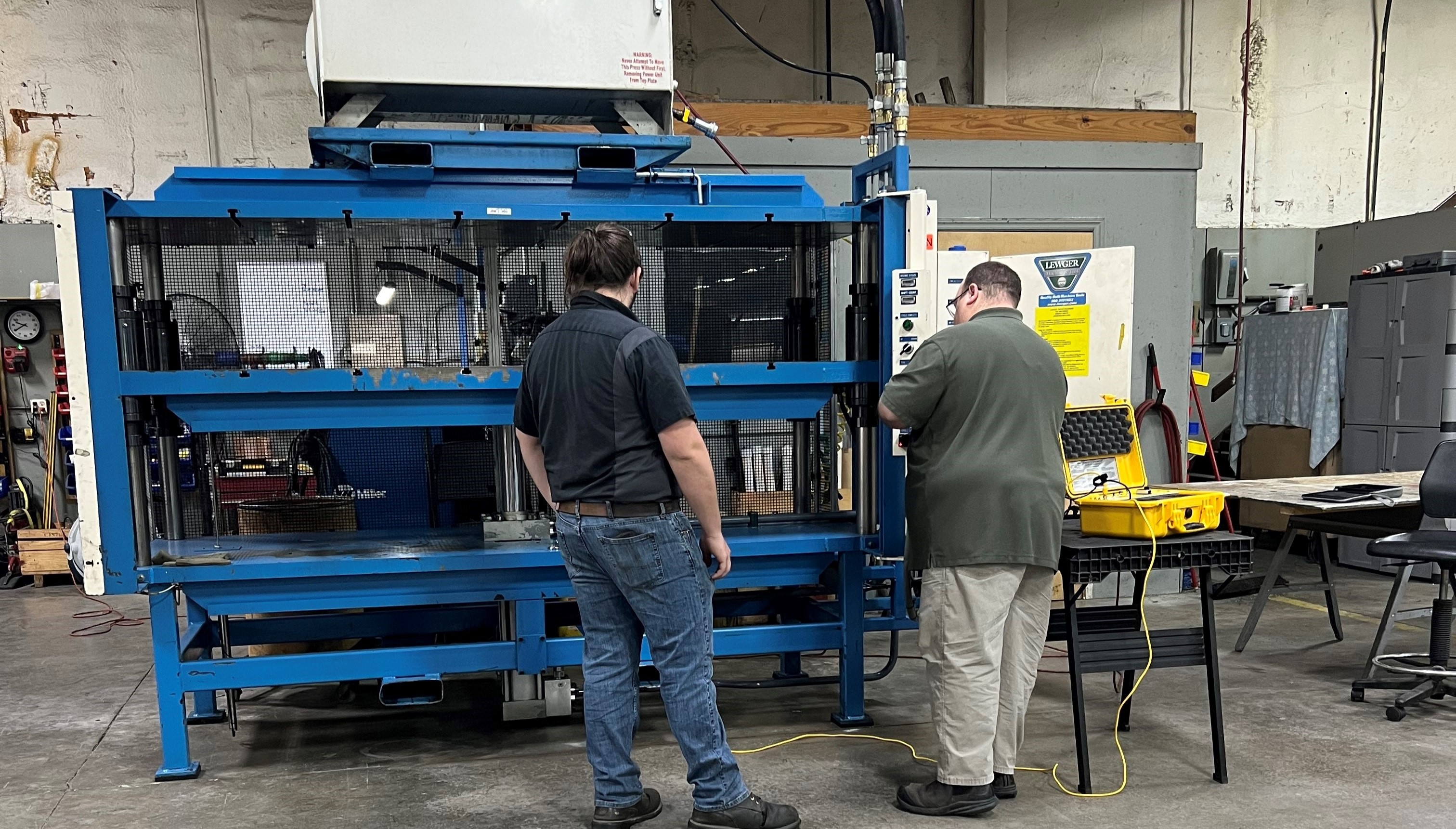
- We review the machines and current guarding in place with your operators and staff to understand how the equipment is used in production.
- Calibrated Testing
- We physically measure how long it takes for the machine to stop after a safety device is triggered.
- We capture multiple stop events to establish a reliable baseline.
- 30-60 minutes for the first machine.
- 20-30 minutes for additional machines in a cell.
- Safety Distance Verification
- We verify whether current guarding and safety devices are set at the proper safe distance and offer an appropriate safety level in response time.
- Detailed Report & Recommendation
- Within one week, you'll receive a comprehensive report with calculations and recommended improvements to bring your machines into compliance.
Timeline: 1-2 days on-site (depending on the number of machines) + 1 week for reporting delivery.
Ready to Verify Your Machine Safety?
Get accurate stop-time data that protects your operators and demonstrates compliance.
Frequently Asked Questions
Why should I avoid the self-test Machine Stop Time?
- Self-testing typically relies on a human watching and hitting a stopwatch, which can easily provide inaccurate readings. Having false stop-time numbers creates the false sense of security that your guards appear compliant when they're actually not.
How long does the assessment take?
- Depends on how many machines we are testing, but this will typically take 1-2 days to conduct testing, then a week to calculate and create the report for improvements
Can you work around production schedules?
- Yes, if the machines are efficiently set up in work cells or production lines. However, inefficiencies or “off-shift” hours can escalate the cost through additional labor hours and premium time.
What do you need from us before the assessment?
- An asset list of all machines being tested. We also ask that you prep the machines for worst-case scenarios of tooling size and weights. This ensures that we capture your true maximum stopping distance.