Manufacturing environments depend on high-speed equipment with moving parts that can cause catastrophic injuries in seconds. Among the most severe are degloving and amputation injuries—traumatic events that permanently alter a worker’s life and carry serious consequences for the employers and operations involved.
These injuries are not accidents waiting to happen. They are the predictable result of inadequate machine safeguarding. Understanding how they occur, what drives the risk, and what standards require is the foundation of any serious prevention effort.
Degloving and Amputation: What They Are and How They Happen
A degloving injury occurs when skin and underlying tissue are forcibly torn from the body—typically when a hand, finger, or limb is caught in rotating components, conveyor nip points, or pinch zones. The mechanics are similar to pulling off a glove: the tissue is stripped away, often exposing muscle, tendons, or bone. Extensive reconstructive surgery is usually required, and full recovery is rarely straightforward.
An amputation injury involves the traumatic loss of a body part—a finger, hand, or limb—caused by sudden crush or shear force. In manufacturing, amputations typically occur when an operator reaches into or near hazardous machine zones without adequate safeguarding in place.
The machine hazards most commonly involved include:
- Point-of-operation zones—cutting, pressing, stamping, punching, and crimping
- Rotating components such as gears, shafts, and pulleys
- Conveyor nip and in-running points
- Pinch points created by belt drives, rollers, and chain-and-sprocket mechanisms
- Uncontrolled stored energy from hydraulics, pneumatics, or compressed springs
- Robotic cell working envelopes without physical perimeter safeguarding
The Human and Operational Consequences
The physical toll of these injuries is significant. Survivors often face permanent loss of function, chronic pain and nerve damage, long recovery timelines involving multiple surgeries, and the need for adaptive devices in daily life. The psychological impact—trauma, anxiety about returning to work, loss of identity and confidence—is frequently underestimated and often undertreated.
For employers, the consequences extend well beyond workers’ compensation claims and medical costs. Severe injuries result in lost production hours, increased insurance premiums, OSHA citations and fines, and damage to workforce morale and organizational reputation. In many cases, the financial exposure from litigation and regulatory penalties far exceeds what a proper safeguarding investment would have cost.
Prevention is not just a compliance necessity. It is a business imperative.
What the Standards Require
Employers in the United States are required to comply with OSHA 29 CFR 1910.212, which mandates that guards protect operators and other employees from machine hazards. The ANSI B11 series, ISO 13849, and ISO 12100 establish the risk assessment methodology and safety design principles that define what “adequate” safeguarding actually means in practice.
Taken together, these standards establish a consistent set of expectations:
- Performing documented hazard and risk assessments
- Designing and implementing guard systems appropriate to the risk level
- Integrating functional safety controls and interlocks
- Establishing lockout/tagout procedures for maintenance access
- Verifying that safeguarding performs as intended through validation and documentation
Failing to meet these standards creates liability exposure that compounds over time—especially when an injury occurs and there is no record of a structured risk reduction effort.
How PowerSafe Approaches Machine Guarding
Eliminating degloving and amputation risk is not a single product purchase—it is an engineered process. PowerSafe Automation delivers turnkey machine safety solutions that address hazard exposure from initial assessment through validated installation.
Risk Assessment
Every project begins with an on-site evaluation of machine hazards, operator exposure, and current safeguarding gaps. We document risk levels based on severity and frequency of exposure, perform a gap analysis against OSHA, ANSI, and ISO requirements, and produce a detailed risk reduction roadmap. This ensures that resources are directed at the hazards that matter most.
Custom Engineered Guarding
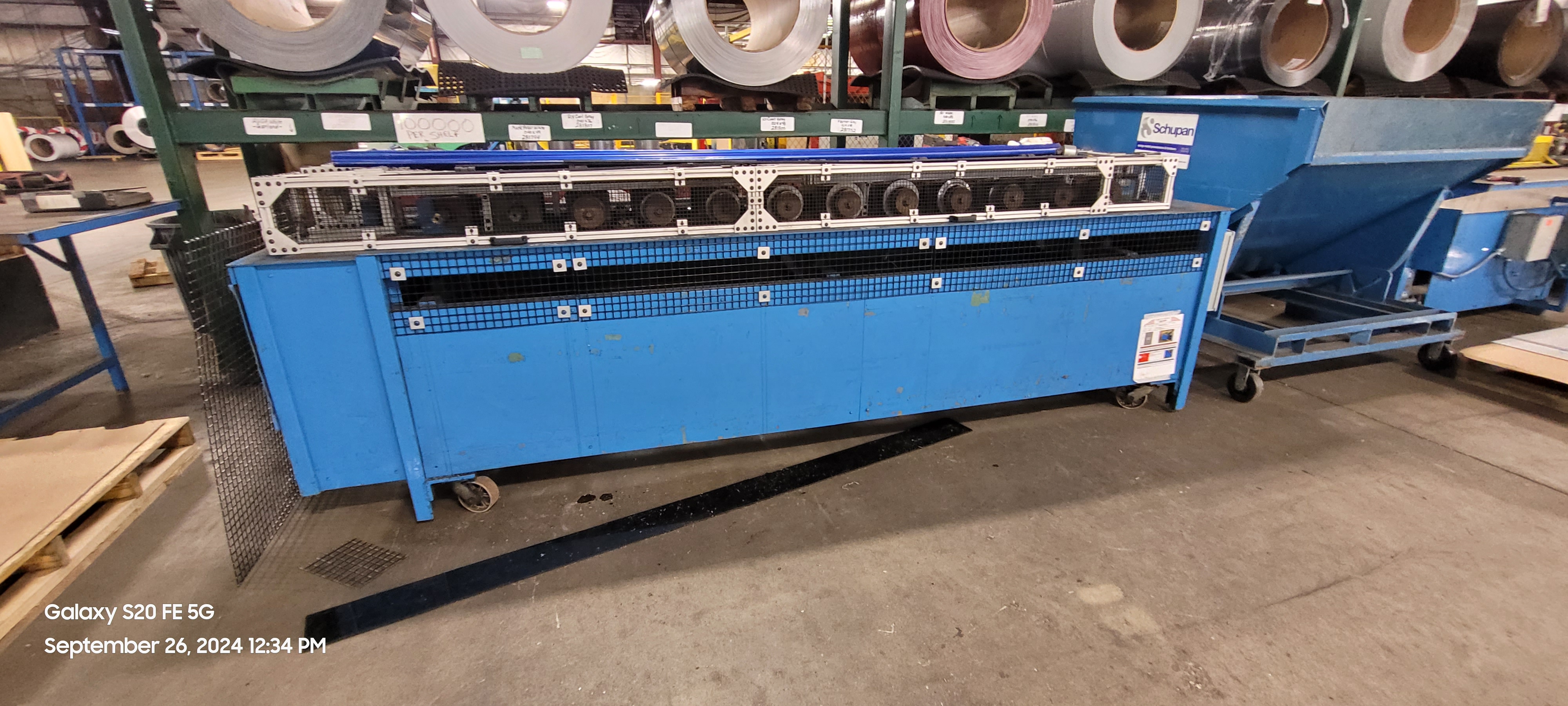
Off-the-shelf guarding rarely addresses the specific geometry and access requirements of industrial machines. PowerSafe designs custom systems—fixed guards, interlocked barriers, light curtains, perimeter fencing—engineered to ANSI B11 and ISO safety requirements and reviewed through CAD and prototype validation before fabrication.
Safety Controls Integration
Physical guarding and safety controls work together. We integrate presence-sensing devices such as light curtains and area scanners, interlock switches that prevent machine restart with guards open, safety PLCs and relays configured for safe-stop functions, and lockout/tagout compatible control architecture. This layered strategy reduces exposure without sacrificing uptime.
Installation and Validation
Installation involves more than mounting panels. Our certified installers align and calibrate sensors and barriers, perform functional testing and validation, and produce detailed compliance documentation. Proper installation is what separates a guarding system that performs reliably from one that creates a false sense of protection.
Training and Documentation
Operators and maintenance personnel need to understand how to work safely around guarded machines. PowerSafe provides training, equipment-specific safety documentation, and periodic reassessment plans to sustain safety performance over time.
Machine Guarding: Myths vs. Reality
| Myth | Reality |
| Guards slow production | Properly engineered guarding reduces unplanned stops and improves uptime. |
| Safety is just HR’s responsibility | Safety affects every department—engineering, operations, and leadership must own it together. |
| Standard, off-the-shelf guards are sufficient | Custom hazards require custom solutions engineered to the specific risk. |
| Coaching workers will stop unsafe behavior | Human behavior is not a reliable control. Engineering controls remove exposure to the hazard itself. |
What OSHA and ANSI Expect
OSHA evaluates machine guarding based on effectiveness, not material type or intent. Guards must prevent contact with hazardous parts, must not introduce new hazards, and must remain in place and functional under normal operating conditions. ANSI standards reinforce a risk-based design approach: identify the hazard, evaluate the risk, and apply controls that reduce exposure to an acceptable level.
When an incident occurs, investigators will ask whether guarding was evaluated against ANSI B11.19 performance criteria, whether reach distances were validated against ISO 13857, and whether the installation was documented and validated. Engineered guarding solutions make those questions straightforward to answer.
Protect Your Workforce. Eliminate the Exposure.
Degloving and amputation injuries are not inevitable. They result from uncontrolled hazard exposure—and that exposure can be engineered away. With a structured, documented approach to machine safeguarding, facilities can eliminate the conditions that cause these injuries while meeting OSHA, ANSI, and ISO requirements.
Ready to Assess the Machine Hazards in Your Facility?
Contact PowerSafe Automation to schedule a machine safety assessment and take the first step toward eliminating degloving and amputation risk in your facility.