Press Safety
Press Safeguarding Solutions
PowerSafe Automation provides engineered press safety solutions for press brakes, mechanical power presses, hydraulic presses, and other industrial press applications—from risk assessment and safeguarding design through installation, controls integration, and validation.
Our press safety solutions incorporate technologies such as Lazer Safe, Wintriss, light curtains, two-hand controls, presence-sensing devices, barrier and hairpin guarding, die blocks, and safety-distance validation for applications including:
- Press brakes
- Mechanical power presses
- Hydraulic presses
- Pneumatic presses
- Production press lines
The press safety standards and regulatory guidance is based on OSHA 1910.212/1910.217 and ANSI B11 standards, where applicable.
Press Safety Is More Than Installing a Guard. A safeguarding device is only one component of a press safety system.
Selecting a Lazer Safe system, light curtain, Wintriss control, two-hand control, barrier, hairpin guard, or other safety device does not by itself establish that a press is properly safeguarded.
The application can require consideration of the press type, clutch/brake or hydraulic system, stopping performance, operating modes, point-of-operation access, control system, safety distance, tooling, feeding method, secondary access, setup and maintenance activities, and the interaction between the safeguard and machine controls.
The right safety device installed incorrectly can still result in an unsafe machine.
Press Safeguarding Solutions

Press Brake Profiling Curtains
Boost press safety with ProTech Eagle Eye Profiling Light Curtains, advanced optical protection with dynamic blanking, fast response, and rugged reliability for industrial machines.
Camera-Based Press Safety
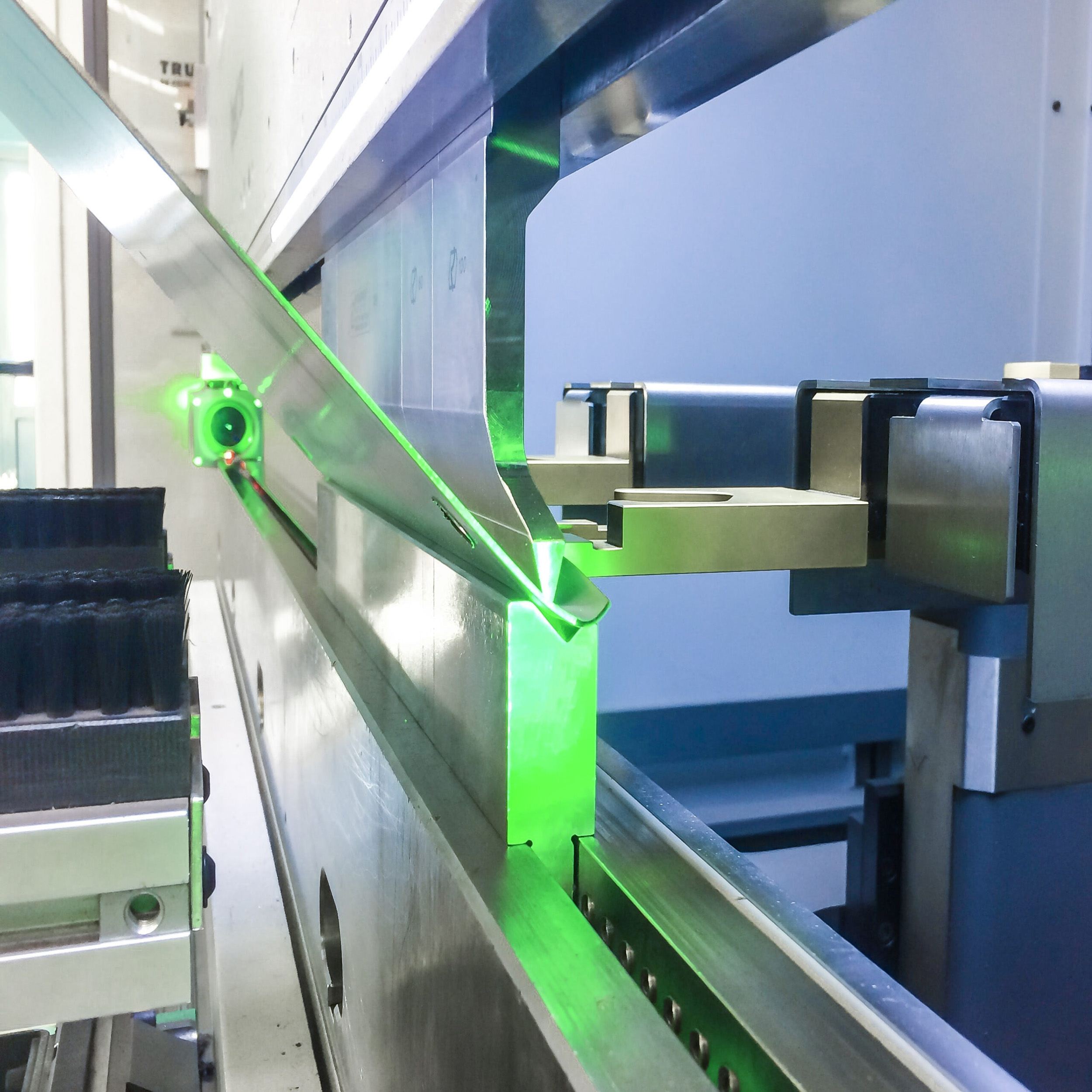
Improve press brake safety with the Lazer Safe camera-based safety system from PowerSafe Automation, high-precision optical protection, fast setup, and reliable performance for modern forming operations.
Press Die Blocks with Safety Interlocks
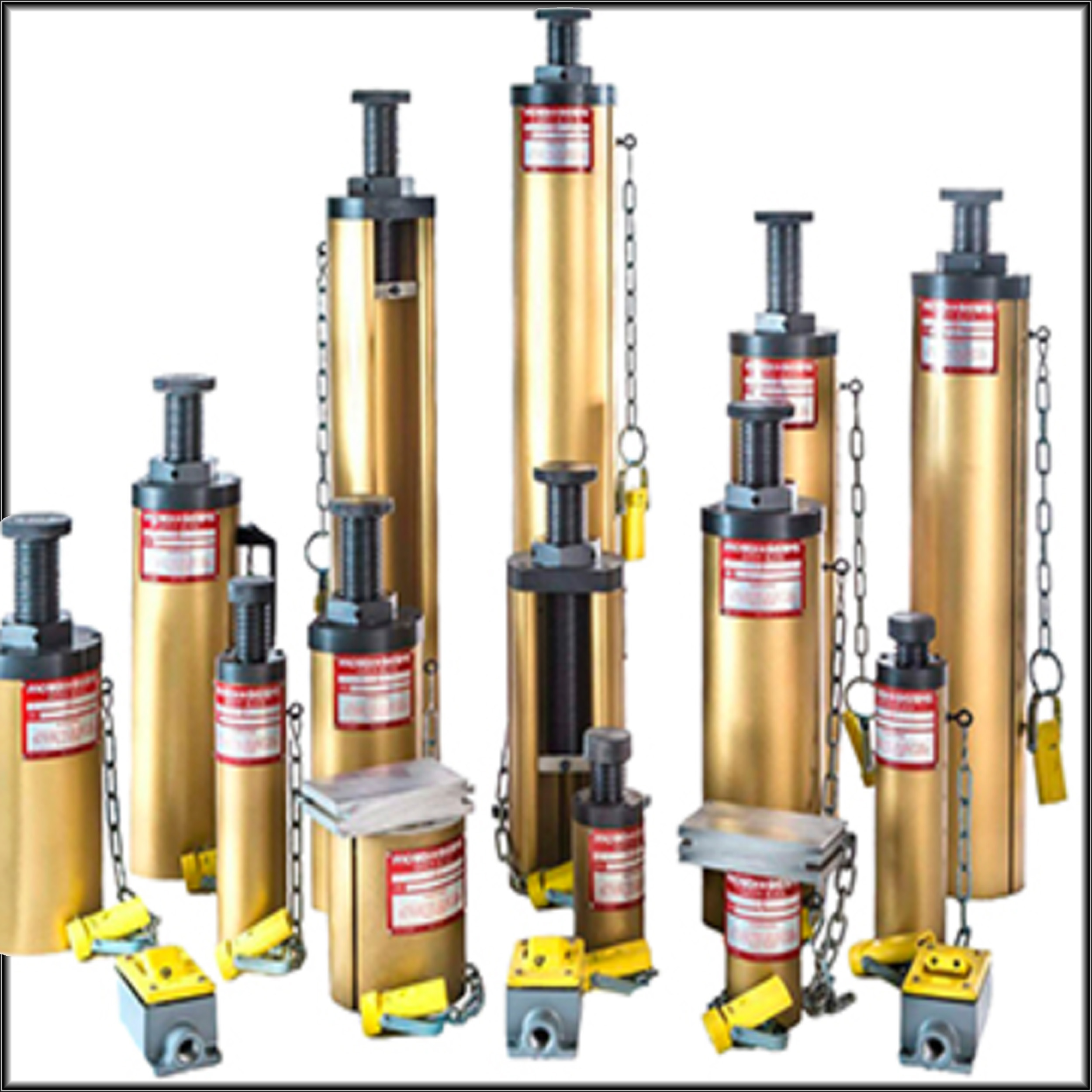
Die blocks with safety interlocks secure press machines during maintenance by preventing accidental ram movement and protecting operators from crushing injuries.
Stamping and Punch Press Guards
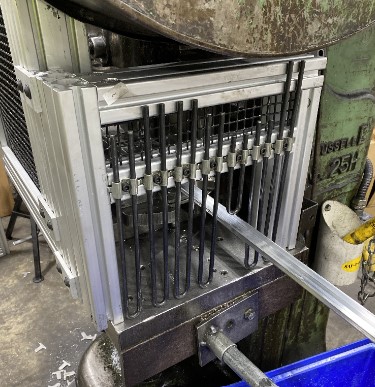
Hardguarding for mechanical presses used in conjunction with safe distance fabricated adjustable pin widths to accommodate for the countless material shapes to be formed per customer order. For added protection, additional solutions can be added by using safety laser scanners, safety light curtain systems (floating blanking options), and control system upgrades as well as die blocks, power cutoffs, and wedges.
Not Every Press Has the Same Safety Requirements
Mechanical Power Press ≠ Hydraulic Press ≠ Press Brake.
Different press types can fall under different OSHA requirements and ANSI B11 machine-specific standards. Identifying the machine type, operating method, hazards, controls, and safeguarding requirements should come before selecting a safety device.
- Press Brake Safety
- Lazer Safe systems, laser-based safeguarding, light curtains, rear guarding, side guarding, interlocks.
- Mechanical Power Press Safety
- Wintriss controls/monitoring, presence sensing, two-hand controls, barrier guarding, clutch/brake considerations.
- Physical Press Guarding
- Hairpin guards, fixed barriers, adjustable guarding, perimeter guarding, access doors.
- Die-Setting & Maintenance Safety
- Die blocks, energy control, setup considerations, maintenance access.
Which OSHA and ANSI Standards Apply to Presses?
There is no single safety standard that applies identically to every press. The applicable OSHA requirements and ANSI B11 standards depend on the press type, application, safeguarding method, and work being performed.
| Press / Application | Primary starting points |
|---|---|
| Mechanical Power Press | OSHA 1910.217 + ANSI B11.1 |
| Hydraulic Press | OSHA 1910.212 + ANSI B11.2 |
| Press Brake | OSHA 1910.212 + ANSI B11.3 |
| Safeguarding Devices | Applicable machine standard + ANSI B11.19 |
| Risk Assessment | Applicable B11 requirements/guidance |
| Electrical / Controls | Applicable NFPA/ANSI/control requirements |
Press Safety & Safeguarding FAQs
1. What OSHA and ANSI standards apply to my press?
The applicable requirements depend on the type of press. Mechanical power presses are specifically addressed by OSHA 1910.217 and ANSI B11.1, while press brakes, hydraulic presses, and other press types may fall under OSHA 1910.212 and their applicable ANSI B11 machine-specific standards. Safeguarding requirements such as those addressed by ANSI B11.19 may also apply.
2. Can I just install a light curtain or other safety device on my press?
Not necessarily. Selecting a safety device requires evaluating the press type, hazards, stopping capability, safety distance, controls, operating modes, tooling, access around the device, reset/restart functions, and supplemental guarding. The appropriate safeguarding method should be determined before selecting the device.
3. Why are stopping time and safety distance important for press safeguarding?
When safeguarding relies on stopping hazardous motion before a person can reach the hazard, the machine's stopping performance becomes part of the safety-system design. Stopping time, safeguard response time, and other applicable factors can determine how far a light curtain or presence-sensing device must be located from the hazard.
4. Do older presses still need to meet machine-safety requirements?
Yes, where applicable. The age of a press does not automatically exempt it from OSHA machine-guarding requirements. Legacy presses can also present additional challenges because modern safeguarding devices may need to be integrated with older controls, braking systems, and operating methods.
5. Does a press safety retrofit need to be validated?
The completed safeguarding system should be verified and, where applicable, validated to confirm that it performs as intended. This may include functional testing, stopping-performance measurements, safety-distance verification, reset/restart testing, safety-device testing, and confirmation that access to remaining hazards has been appropriately addressed.
Not Sure Which Safeguarding Method Applies?
Start with the press, not the safety device. PowerSafe can evaluate the machine, application, existing controls, stopping performance, operator interaction, and applicable safeguarding requirements before developing the appropriate solution.

At PowerSafe Automation, my focus is on delivering turnkey machine safety and automation solutions through practical, engineered risk reduction. Our team provides machine guarding, electronic safety, assessments, controls integration, validation, ergonomic solutions, and mechanical and controls automation. https://www.linkedin.com/in/safetyshawnmantel/