
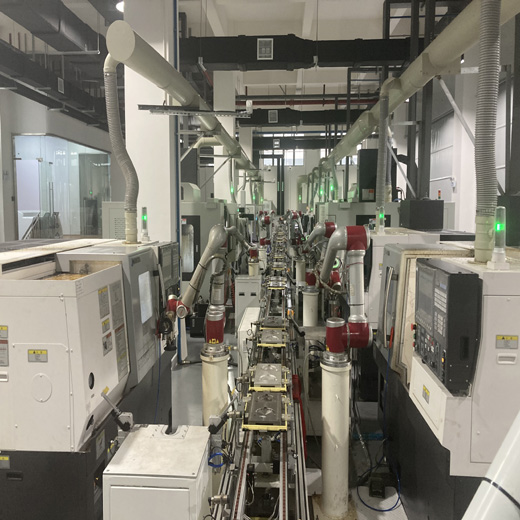
If you’re running CNCs, presses, injection molding machines, or similar equipment, chances are you have operators performing repetitive load/unload tasks that are perfect candidates for automation.
This guide breaks down the what, why, how, and when of machine tending—so you can evaluate it through a production, safety, and ROI lens.
What Is Machine Tending?
Machine tending is the process of:
- Loading raw material or parts into a machine
- Initiating or interacting with the machine cycle
- Unloading the finished part
Traditionally, this is done manually—but cobots are increasingly taking over this role.
Common Machine Tending Applications:
- CNC mills and lathes
- Injection molding machines
- Press brakes and stamping presses
- Laser cutting and fabrication equipment
What Makes It Ideal for Automation?
- Repetitive motion
- Predictable cycle times
- Defined part positions
- Low decision-making variability
Why Use Cobots for Machine Tending?
1. Maximize Machine Uptime
Machines don’t make money when they’re waiting on operators.
Cobots:
- Reduce idle time
- Enable lights-out or extended production
- Keep cycle times consistent
2. Solve Labor Challenges
Machine tending is often:
- Repetitive
- Hard to staff
- Low retention
Cobots allow you to:
- Reassign operators to higher-value work
- Reduce dependency on hard-to-fill roles
3. Improve Safety
Manual tending exposes operators to:
- Moving machinery
- Sharp parts
- Hot surfaces
Cobots help reduce:
- Direct interaction with hazards
- Risk of injury
When engineered correctly, this aligns directly with machine safety initiatives.
4. Consistency & Quality
Cobots don’t:
- Miss cycles
- Misload parts
- Get fatigued
This leads to:
- Reduced scrap
- Improved repeatability
How to Implement a Machine Tending Cell
Step 1: Understand the Machine Interface
Key questions:
- How does the machine start/stop?
- Can it communicate with a robot (I/O, PLC)?
- Is door automation required?
Step 2: Design Part Presentation
Consistency is everything.
Options include:
- Trays or dunnage
- Conveyors
- Vision-guided picking
Poor presentation = unreliable automation.
Step 3: Select the Right End Effector
Your gripper must handle:
- Part weight
- Shape
- Surface condition (oily, sharp, hot)
Step 4: Integrate Safety Properly
Even with cobots, machine tending often requires:
- Interlocked doors
- Safety scanners or area monitoring
- Risk assessments (ANSI / ISO compliance)
The machine itself is usually the hazard—not just the robot.
Step 5: Build a Scalable Cell
A well-designed machine tending cell includes:
- T-slotted aluminum framing
- Modular guarding
- Cable management
- Ergonomic operator access
When Does Machine Tending Make Sense?
Best Fit Scenarios:
- Cycle times longer than ~30 seconds
- Repetitive load/unload tasks
- Stable part geometry
- Machines with consistent operation
Proceed with Caution:
- Highly variable parts without vision systems
- Extremely short cycle times (robot may not keep up)
- Poor machine reliability
Not Ideal:
- Processes requiring constant manual adjustment
- One-off or highly customized jobs
Key Success Factors
1. Cycle Time Matching
The robot must:
- Load/unload within the machine cycle
- Not become the bottleneck
2. Machine Reliability
Automation amplifies problems.
If your machine:
- Stops frequently
- Requires manual intervention
Fix that first.
3. Fixturing & Repeatability
Consistent positioning ensures:
- Accurate loading
- Reduced errors
4. Upstream & Downstream Flow
Think beyond the machine:
- How are parts fed in?
- Where do finished parts go?
Safety Considerations You Can’t Ignore
Common Risks:
- Moving machine components
- Pinch points
- Ejected parts
- Sharp edges
Engineering Controls:
- Interlocked guarding
- Presence sensing devices (light curtains, scanners)
- Defined safe zones
- Emergency stop integration
This is where machine safety and automation must work together—not separately.
Common Mistakes to Avoid
1. Automating an Unstable Process
Fix:
- Machine uptime
- Process consistency
Before adding a robot.
2. Ignoring Safety Early
Retrofitting safety later:
- Costs more
- Delays deployment
3. Overcomplicating the First Cell
Start simple:
- One machine
- One part
- One clear objective
4. Underestimating Integration
Machine tending isn’t just a robot—it’s:
- Controls
- Safety
- Mechanical design
- Workflow
How Machine Tending Fits Into a Bigger Strategy
Machine tending is often the gateway to broader automation, leading to:
- Integrated material handling
- Multi-machine cells
- Lights-out manufacturing
- Full production line automation
It also naturally connects to:
- Machine guarding upgrades
- Ergonomic improvements
- Lean manufacturing flow
Final Thoughts: Where Automation Meets Practical ROI
Machine tending is one of the few automation investments that:
- Is easy to justify
- Scales over time
- Directly impacts productivity
Done right, it becomes:
- A repeatable blueprint for future automation
- A bridge between operations and safety
- A competitive advantage on your shop floor
Thinking About Automating a Machine?
Start with these questions:
- Which machines have the most idle time?
- Where are operators tied up in repetitive tasks?
- Which processes are stable enough to automate today?
- How can safety be improved alongside automation?