
Anonymous Manufacturing Customer | Turnkey Machine Safety Solution by PowerSafe Automation
Project Overview
An anonymous high-volume manufacturing customer approached PowerSafe Automation with a safety challenge:
They had a robotic palletizing cell that required frequent operator interaction for slip-sheet loading, pallet staging, and quality checks — but traditional guarding methods were reducing productivity and creating workflow bottlenecks.
The objective was clear:
- Reduce risk to acceptable levels.
- Maintain or improve throughput.
- Avoid full perimeter hard guarding with constant stop/start interruptions.
- Improve operator ergonomics and flow.
- Support the customer's risk-reduction objectives using applicable OSHA requirements and ANSI B11 guidance as part of the engineering basis.
PowerSafe Automation engineered a risk-based solution incorporating safety-related control functions designed to achieve the required performance level identified for the application.
The Challenge: Traditional Guarding Was Slowing Production
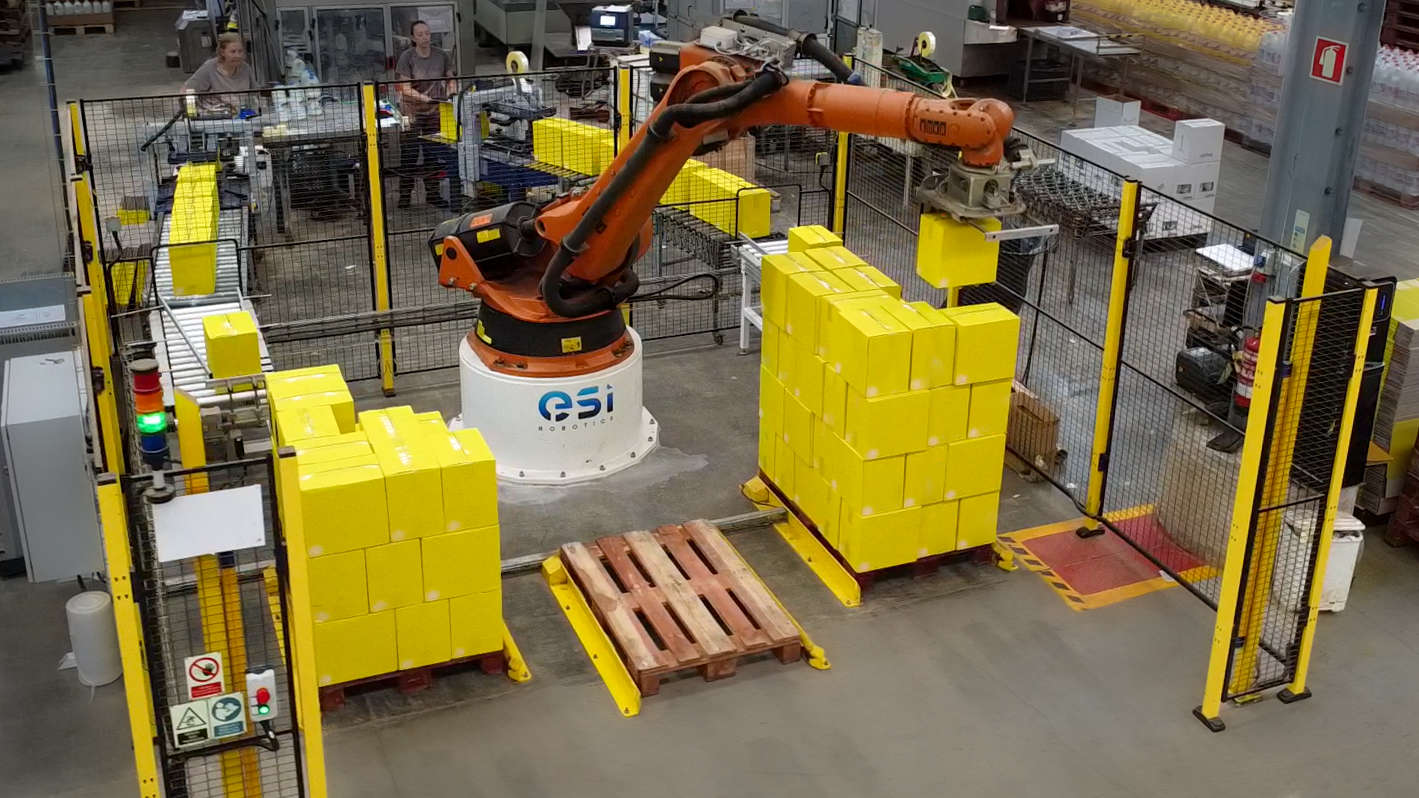
The palletizing system included:
- 6-axis industrial robot
- Dual pallet zones
- Slip sheet magazine.
- Operator replenishment point
- Downstream conveyor
The original safety concept relied on:
- Full perimeter fencing
- Interlocked access doors
- Manual reset requirements
Pain Points Identified
- Frequent access required for pallet and slip-sheet replenishment.
- Operators defeating doors to avoid cycle delays.
- Excessive downtime from repeated safety resets
- Poor line-of-sight visibility
The customer needed a smarter safeguarding strategy — not just more steel fencing.
Risk Assessment & Performance Level Determination
PowerSafe Automation conducted a Task-Based Risk Assessment (TBRA) aligned with:
- OSHA 1910.212
- ANSI B11.19
- ISO 13849-1
Hazards identified:
- Robot arm strike zone
- Crushing between pallet loads
- Unexpected restart after entry
- Access during automatic cycle
Required safety performance level: PL d, Category 3
A traditional light curtain would have caused constant full stops. A physical barrier would have restricted operator efficiency.
The answer required presence detection that allowed controlled collaboration without full stoppage.
Why the MS Model from Inxpect?
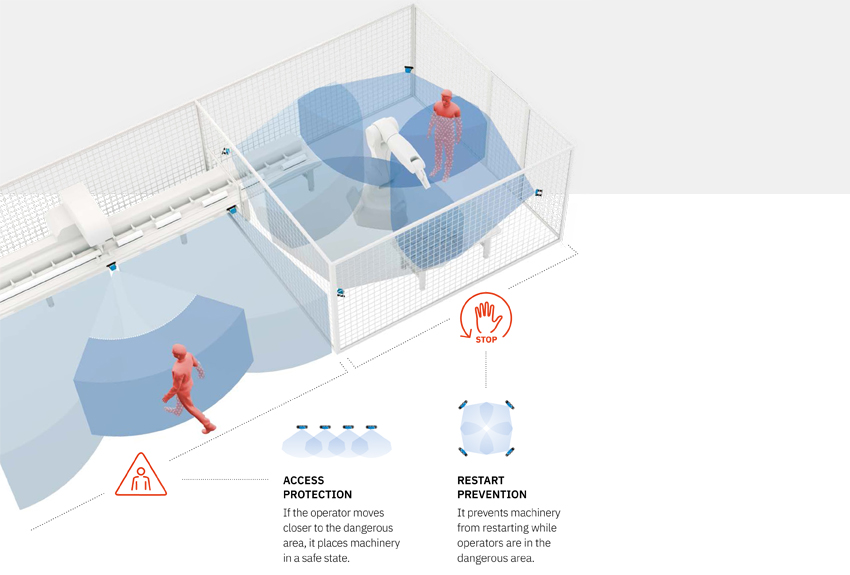
The MS Model radar from Inxpect offers:
- SIL2 / PL d capability
- Volumetric detection (3D zone monitoring)
- Immunity to dust, debris, lighting conditions
- Selective detection of human movement
- Adjustable detection fields
Unlike light curtains, radar does not require clear optical paths. Unlike pressure mats, it covers volumetric space. Unlike full fencing, it allows controlled workflow flexibility.
Engineered Safety Architecture
PowerSafe Automation designed a layered solution:
1. Zoning Strategy
- Zone 1 (Warning Zone): Reduced speed of robot
- Zone 2 (Protection Zone): Safe stop initiated.
- Safe Reset Validation: Controlled restart logic
2. Integrated Components
- MS Model radar sensors
- Safety PLC
- Dual-channel safety relays
- Category 3 architecture
- Monitored manual reset.
3. Mechanical Guarding
Selective T-slotted aluminum framing was used to:
- Protect rear blind spots.
- Create defined approach paths.
- Improve operator ergonomics.
The result was risk reduction without operational paralysis.
Before vs After
| Category | Before | After |
| Access Delays | Frequent | Minimal |
| Operator Bypass | Observed | Eliminated |
| Full Stop Cycles | Constant | Only when necessary |
| Safety Compliance | Questionable | Validated |
| Productivity | Reduced | Improved |
Measurable Outcomes
- 32% reduction in cycle interruptions
- 18% improvement in palletizing throughput
- Zero safety bypass incidents post-installation
- Verified PL d validation report.
- Positive OSHA audit feedback
Most importantly: Operators felt safer — without feeling restricted.
Why Radar Instead of Light Curtains?
| Radar (MS Model) | Light Curtain |
| Detects motion in volume | Detects beam break |
| Not affected by dust | Requires clear path |
| Flexible zone shaping | Fixed beam field |
| Ideal for palletizing cells | Better for defined entry points |
For high-interaction robotic palletizing, radar created a more natural workflow.
Customer Testimonial (Anonymous)
“PowerSafe Automation did not just sell us a device — they engineered a solution. We improved safety and productivity at the same time.”
Strategic Takeaway
Machine safety should never be:
- Overbuilt
- Under-designed
- Or productivity-killing
By applying risk-based engineering principles and leveraging advanced detection technology like the MS Model radar from Inxpect, PowerSafe Automation delivered:
- Risk Reduction
- Compliance
- Productivity
- Operator Acceptance
Could This Apply to Your Robotic Cell?
If you have:
- Robotic palletizers
- High-interaction automation zones
- Frequent operator replenishment
- Struggles with light curtain nuisance trips.
There may be a better way than traditional fencing.
PowerSafe Automation engineers risk reduction — not just guarding.