
Presence Sensing Safety Devices
Trapped Key Interlock Safety Switches (Slam Lock & Chain Lock) — Rockwell Automation
Mechanical access control and energy isolation interlocks
The Rockwell Automation 440T Prosafe Series enforces a predetermined sequence of events before operators can access a hazardous area — power cannot be restored until the key is returned, and the guard cannot open until the machine is safely locked out. The Prosafe Slam Lock automatically engages when a guard door closes, trapping the key until the guard is fully secured; the Chain Lock permanently links the key to an isolation device (disconnect switch, pneumatic shutoff, or valve), ensuring energy is positively isolated before the key can be removed. Both variants are rated to Category 3, PLd in accordance with EN ISO 13849-1 and classified under EN ISO 14119 and GS-ET-31, with 316L stainless-steel construction and a rated mechanical life of 200,000 operations.
Key Features
- Rated to Category 3, PLd per EN ISO 13849-1; classified under EN ISO 14119 and GS-ET-31
- Functional Safety Data: PFHd = 1.00E-7 (probability of dangerous failure per hour); T1 = 20-year proof test interval
- 316L stainless-steel construction throughout — keys, faceplate, and code barrel assembly
- Maximum shear force to key: 15.1 kN (3,394.62 lbf); maximum torque to key: 14 N•m (10.33 lb•in)
- Slam Lock models (mechanical): holding force up to 2,000 N (450 lb) with standard, flexible, and flat actuator options
- Slam Lock models (electrical): 2 N.C. positive-break safety contacts; thermal current 10 A; minimum switching current 5V / 5 mA DC; contact gap >2 × 2 mm
- Chain Lock models available in mechanical (lever or chain actuator) and electrical/solenoid variants with 24V DC or 110V AC solenoid operation
- Replaceable code barrel assembly — field-replaceable without full system replacement
- Weatherproof stainless-steel dust cap included as standard; tamper-resistant screws fitted
- CE Marked for all applicable EU directives; UKCA Marked for all applicable regulations; TÜV Certified
- Operating temperature: −40 to +80°C (−40 to +176°F) for mechanical and electrical variants
- Mechanical life: 200,000 operations across all variants
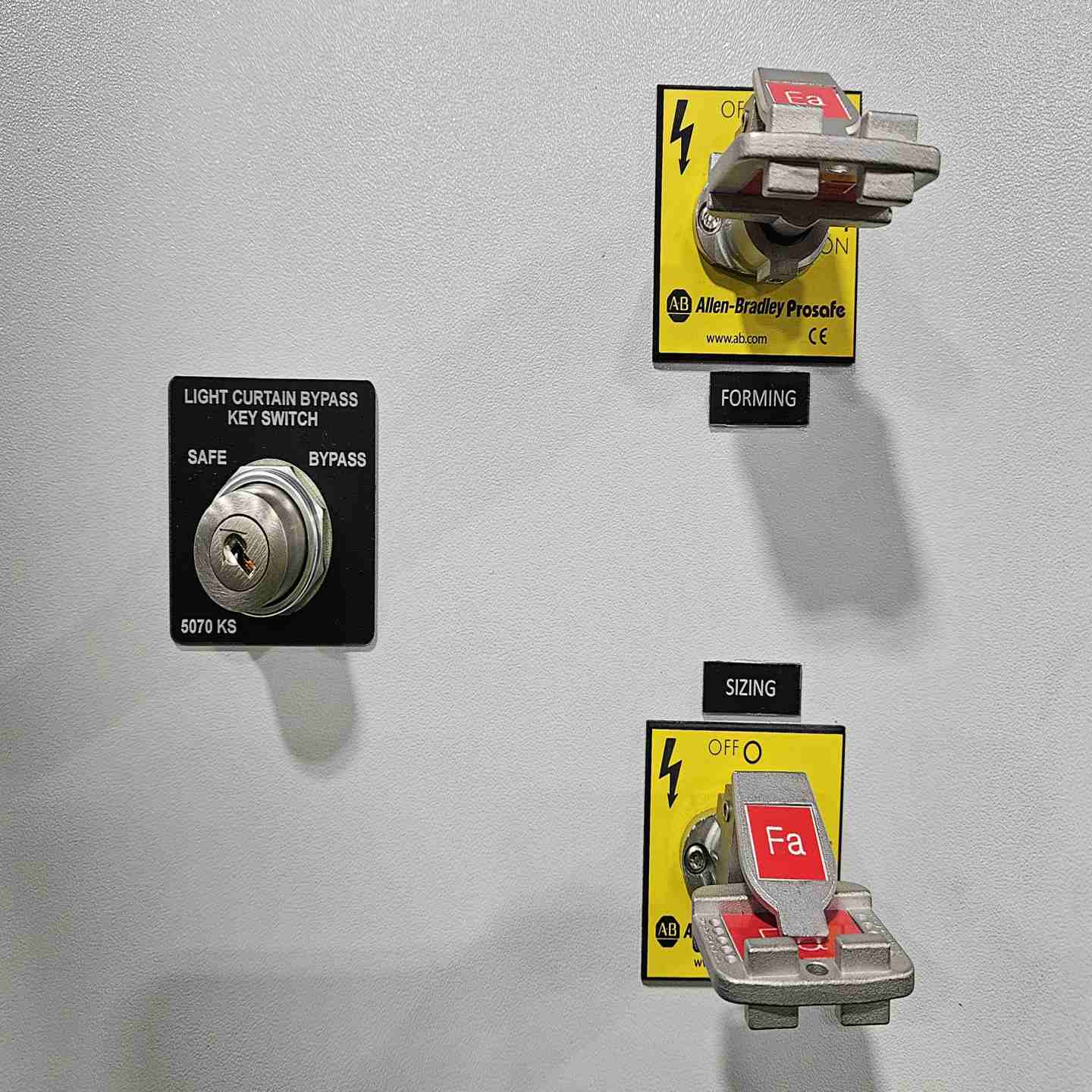


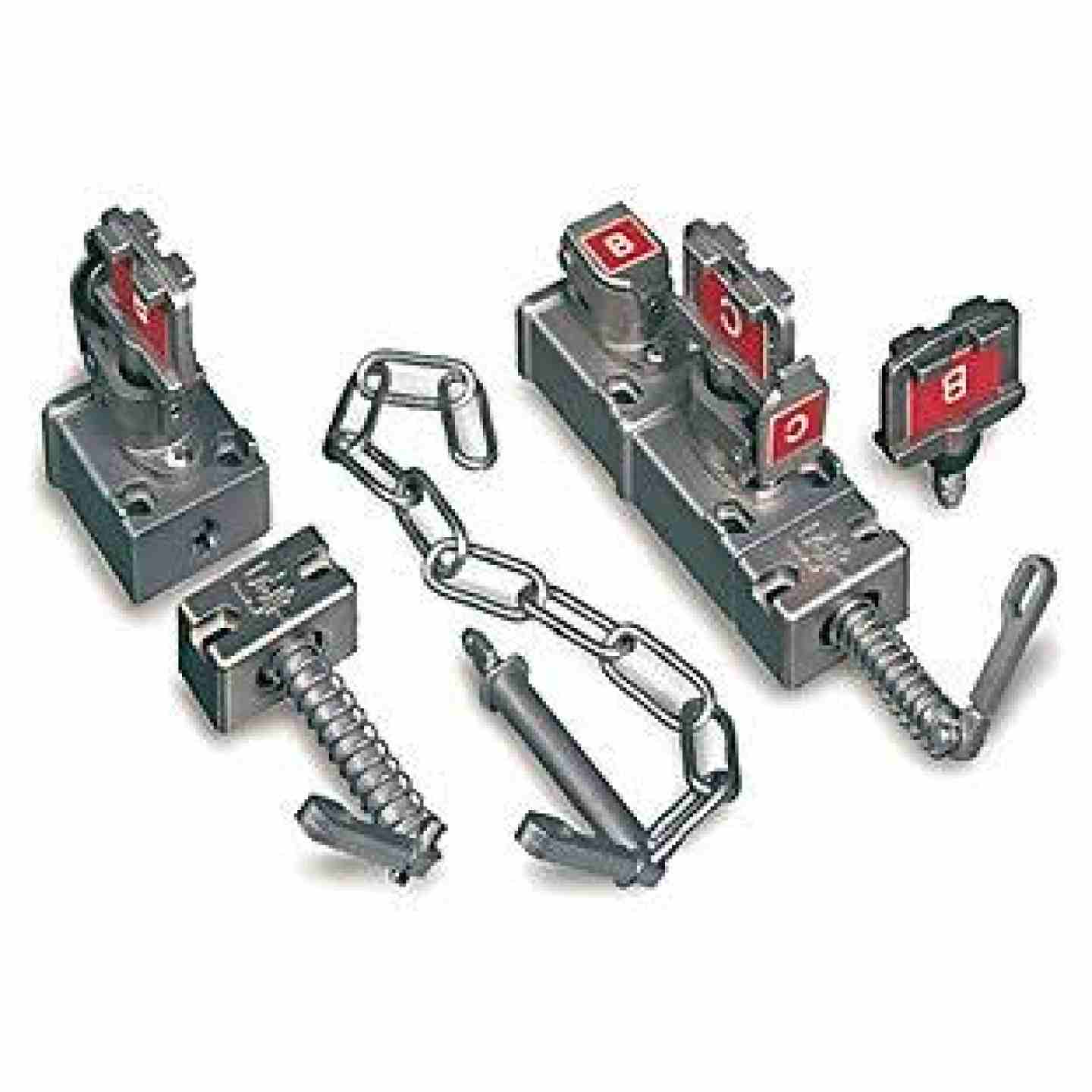

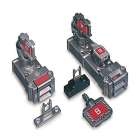
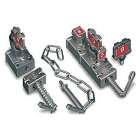
Trapped Key Interlock Safety Switches (Slam Lock & Chain Lock) — Rockwell Automation
Mechanical access control and energy isolation interlocks
The Rockwell Automation 440T Prosafe Series enforces a predetermined sequence of events before operators can access a hazardous area — power cannot be restored until the key is returned, and the guard cannot open until the machine is safely locked out. The Prosafe Slam Lock automatically engages when a guard door closes, trapping the key until the guard is fully secured; the Chain Lock permanently links the key to an isolation device (disconnect switch, pneumatic shutoff, or valve), ensuring energy is positively isolated before the key can be removed. Both variants are rated to Category 3, PLd in accordance with EN ISO 13849-1 and classified under EN ISO 14119 and GS-ET-31, with 316L stainless-steel construction and a rated mechanical life of 200,000 operations.
Key Features
- Rated to Category 3, PLd per EN ISO 13849-1; classified under EN ISO 14119 and GS-ET-31
- Functional Safety Data: PFHd = 1.00E-7 (probability of dangerous failure per hour); T1 = 20-year proof test interval
- 316L stainless-steel construction throughout — keys, faceplate, and code barrel assembly
- Maximum shear force to key: 15.1 kN (3,394.62 lbf); maximum torque to key: 14 N•m (10.33 lb•in)
- Slam Lock models (mechanical): holding force up to 2,000 N (450 lb) with standard, flexible, and flat actuator options
- Slam Lock models (electrical): 2 N.C. positive-break safety contacts; thermal current 10 A; minimum switching current 5V / 5 mA DC; contact gap >2 × 2 mm
- Chain Lock models available in mechanical (lever or chain actuator) and electrical/solenoid variants with 24V DC or 110V AC solenoid operation
- Replaceable code barrel assembly — field-replaceable without full system replacement
- Weatherproof stainless-steel dust cap included as standard; tamper-resistant screws fitted
- CE Marked for all applicable EU directives; UKCA Marked for all applicable regulations; TÜV Certified
- Operating temperature: −40 to +80°C (−40 to +176°F) for mechanical and electrical variants
- Mechanical life: 200,000 operations across all variants
- Assembly
- Each order includes the Prosafe trapped key interlock unit (slam lock or chain lock variant as specified) with the selected actuator type (standard, flexible, flat, lever, or chain), code barrel(s) pre-set to the specified primary code, weatherproof stainless-steel dust cap, tamper-resistant fasteners, and mounting hardware.
- Primary keys are ordered separately and must be specified at the time of order using the key coding system; secondary keys included with product where noted in the catalog number.
- Full body access doors should have a spring-loaded personnel key to ensure final key before reaching the hazard is removed.
- Optional engraved faceplates and optional IP65 plastic enclosures are available as accessories.
- Key code contamination charts are available to avoid key copies being used.
- Choosing the Right Variant
- Rotary Disconnect Switch:
- 2 NO / 2 NC contacts, rated for 20-amps
- Optional solenoid release unit (SRU) is available requiring a request to enter feedback signal to release the key via the PLC, a Back EMF, or a timer-delay unit.
- Exchange unit for multi-user access:
- 6+ keys can use an external exchange panel without an enclosure
- >6 keys requires an enclosure with a back panel for the exchange unit setup
-
Slam Lock deadbolt latch:
- Ideal for machine guard doors and access gates.
- The actuator automatically locks when the guard closes.
- The door does stay unlocked until the "C" key is inserted.
- Fully flexible actuator key GD2 style
- The trapped key cannot be released until the actuator is fully engaged in the receiver, confirming the guard is securely closed. Prevents guards from being accidentally left unlocked and enforces the correct access sequence. Available in mechanical, electrical, and solenoid versions with single or dual key configurations. Well suited for robot cells, perimeter guarding, and maintenance access doors requiring controlled entry.
-
Chain Lock / Access deadbolt latch with chains:
- Ideal for disconnect switches and energy isolation points.
- The key is permanently attached to the isolation device via chain or lever, and cannot be removed until the device is in the safe (OFF/isolated) position.
- Prevents keys from being separated from the associated isolation point and improves operator accountability.
- Available in mechanical and electrical/solenoid versions with lever or chain actuators, single to five-key configurations.
- Commonly used on electrical disconnect switches, pneumatic shutoff valves, hydraulic isolation valves, and multi-energy lockout systems.
- Rotary Disconnect Switch:
- Output Options
- Mechanical Slam Lock and Chain Lock
- No electrical outputs — key-trapping logic is entirely mechanical.
- Electrical Slam Lock (Prosafe Slamlock Electrical)
- 2 N.C. positive-break safety contacts + 1 N.O. auxiliary contact. Safety contact ratings: AC 15 — Ue 500V / Ie 1A; DC — 250V / 0.5A, 24V / 2A. Thermal current (Ith): 10 A. Minimum switching: 5V, 5 mA DC. Contact gap: >2 × 2 mm (0.07 in). Rated insulation voltage: 500V. Rated impulse withstand voltage: 2500V. Conduit entry: 3 × M20.
- Mechanical Slam Lock and Chain Lock
- Environmental Ratings
- IP67 (electrical bolt interlock variants)
- Operating temperature: −40 to +80°C (−40 to +176°F) [mechanical, electrical, slam lock]; 0 to +40°C (32 to +104°F) [solenoid release units]
- Relative humidity: 95%
- Material: 316L stainless steel (body, faceplate, keys, code barrels, dust cap)
- Applicable Safety Standards
- EN ISO14119
- GS-ET-31
- Can be used in safety application up to category 3
- PLd in accordance with EN ISO 13849-1
- In the Application area of EN 60204-1