
Presence Sensing Safety Devices
Safety Switch Mats - Recora Switchmat® Series
Pressure-sensitive presence-detection floor mats for machine and robot guarding
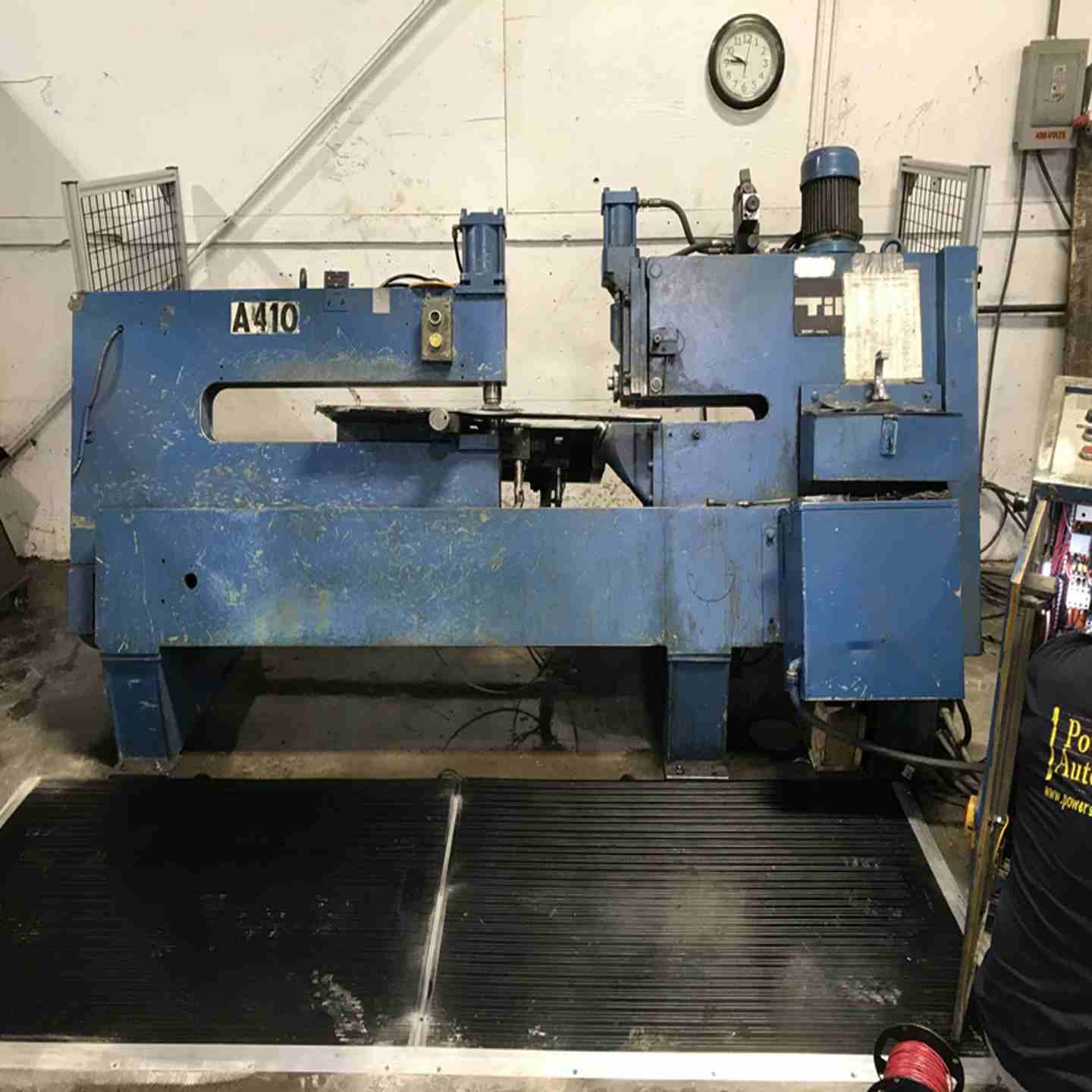
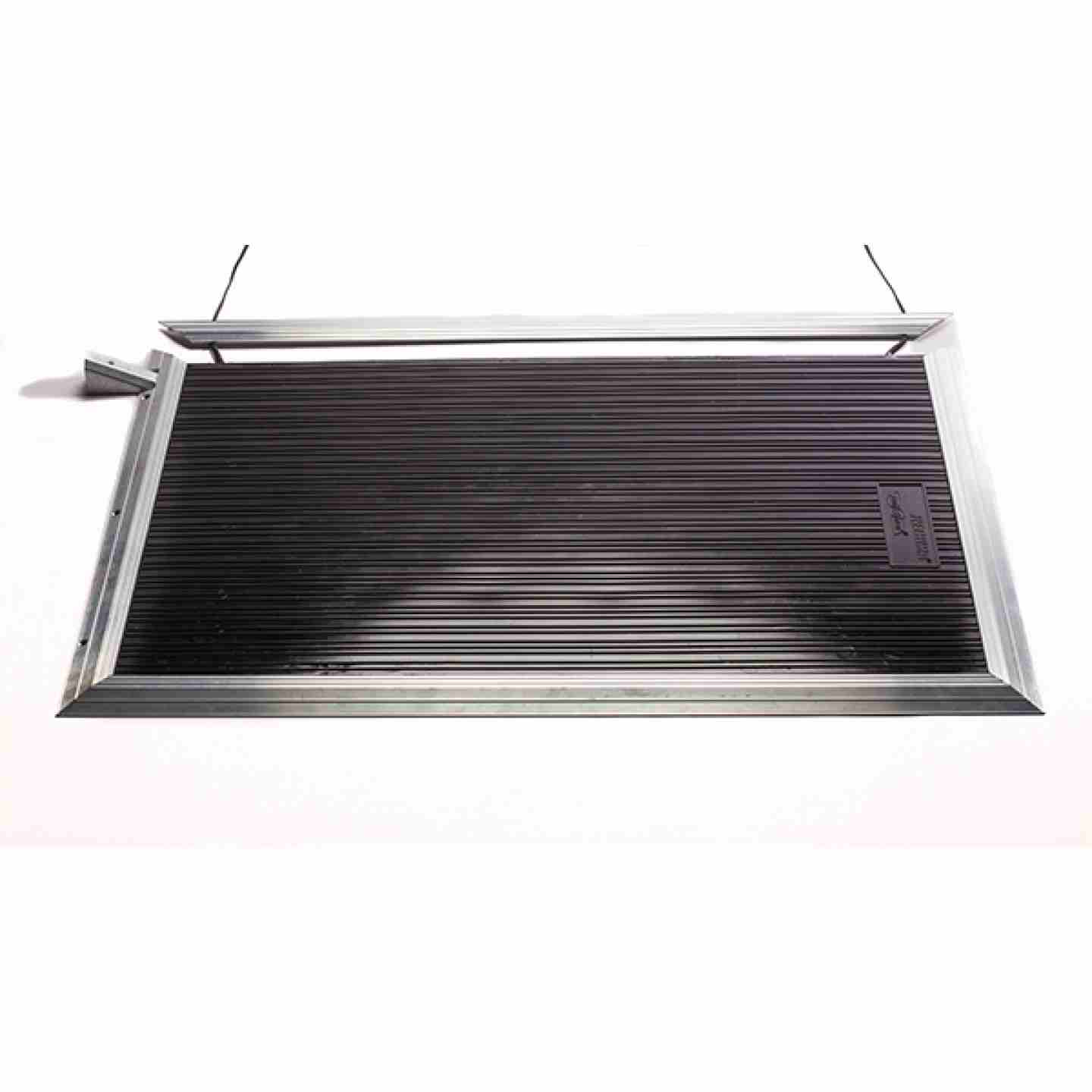
Recora Switchmat® safety mats detect an operator's presence in a hazardous zone and signal the machine to stop the moment weight is applied — protecting personnel around presses, robots, conveyors, and automated cells during operation, setup, and maintenance. Each mat is fully molded (not laminated) to resist oil, coolant, weld spatter, and most industrial liquids, and is active across more than 95% of its surface. Available in thin 3/8" standard series and vehicle-rated heavy-duty series, in standard and fully custom sizes and shapes.
Key Features:
- Reaches Safety Category 3 (per ANSI B11.19) when 4-wire heavy-duty (EHD) mats are combined with the Recora FSC-6R monitoring relay
- Complies with ANSI/RIA standards for robot guarding
- 10–15 lb activation pressure triggers a stop signal on contact
- Active over more than 95% of the mat surface — minimal dead zones
- Fully molded plastisol (vinyl) construction, not laminated, resisting dirt, oil, coolant, and weld spatter
- Heavy-duty (14HD / 14EHD) series rated to withstand both foot traffic and vehicle loads (forklifts, carts)
- Low-profile 3/8" standard series (12H, 15H, 30H) minimizes trip hazard in walk zones
- Twin steel-plate contact construction (HD series) closes the circuit under load and signals the monitoring device
- Single-pole, single-throw, normally-open, momentary-contact switching
- Low-voltage operation: 12 W at 24 V AC or DC
- Fail-safe dual-lead (HD) configuration guards against severed leads, transformer failure, and power loss when used with a Recora Fail-Safe Control
- Custom sizing and shaping available — including cutouts for machine legs, posts, and walls — using snap-on aluminum edging and connectors
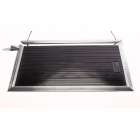
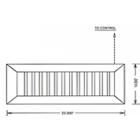
Safety Switch Mats - Recora Switchmat® Series
Pressure-sensitive presence-detection floor mats for machine and robot guarding
Recora Switchmat® safety mats detect an operator's presence in a hazardous zone and signal the machine to stop the moment weight is applied — protecting personnel around presses, robots, conveyors, and automated cells during operation, setup, and maintenance. Each mat is fully molded (not laminated) to resist oil, coolant, weld spatter, and most industrial liquids, and is active across more than 95% of its surface. Available in thin 3/8" standard series and vehicle-rated heavy-duty series, in standard and fully custom sizes and shapes.
Key Features:
- Reaches Safety Category 3 (per ANSI B11.19) when 4-wire heavy-duty (EHD) mats are combined with the Recora FSC-6R monitoring relay
- Complies with ANSI/RIA standards for robot guarding
- 10–15 lb activation pressure triggers a stop signal on contact
- Active over more than 95% of the mat surface — minimal dead zones
- Fully molded plastisol (vinyl) construction, not laminated, resisting dirt, oil, coolant, and weld spatter
- Heavy-duty (14HD / 14EHD) series rated to withstand both foot traffic and vehicle loads (forklifts, carts)
- Low-profile 3/8" standard series (12H, 15H, 30H) minimizes trip hazard in walk zones
- Twin steel-plate contact construction (HD series) closes the circuit under load and signals the monitoring device
- Single-pole, single-throw, normally-open, momentary-contact switching
- Low-voltage operation: 12 W at 24 V AC or DC
- Fail-safe dual-lead (HD) configuration guards against severed leads, transformer failure, and power loss when used with a Recora Fail-Safe Control
- Custom sizing and shaping available — including cutouts for machine legs, posts, and walls — using snap-on aluminum edging and connectors
- Assembly:
- Recora Switchmat® main unit — heavy-duty molded pressure-sensitive safety mat
- Lead wire(s) for connection to the safety/control system: standard single-lead mats ship with 2-conductor wire (normally open); dual-lead (HD) mats ship with the leads required for fail-safe monitoring, with a 4-conductor option available
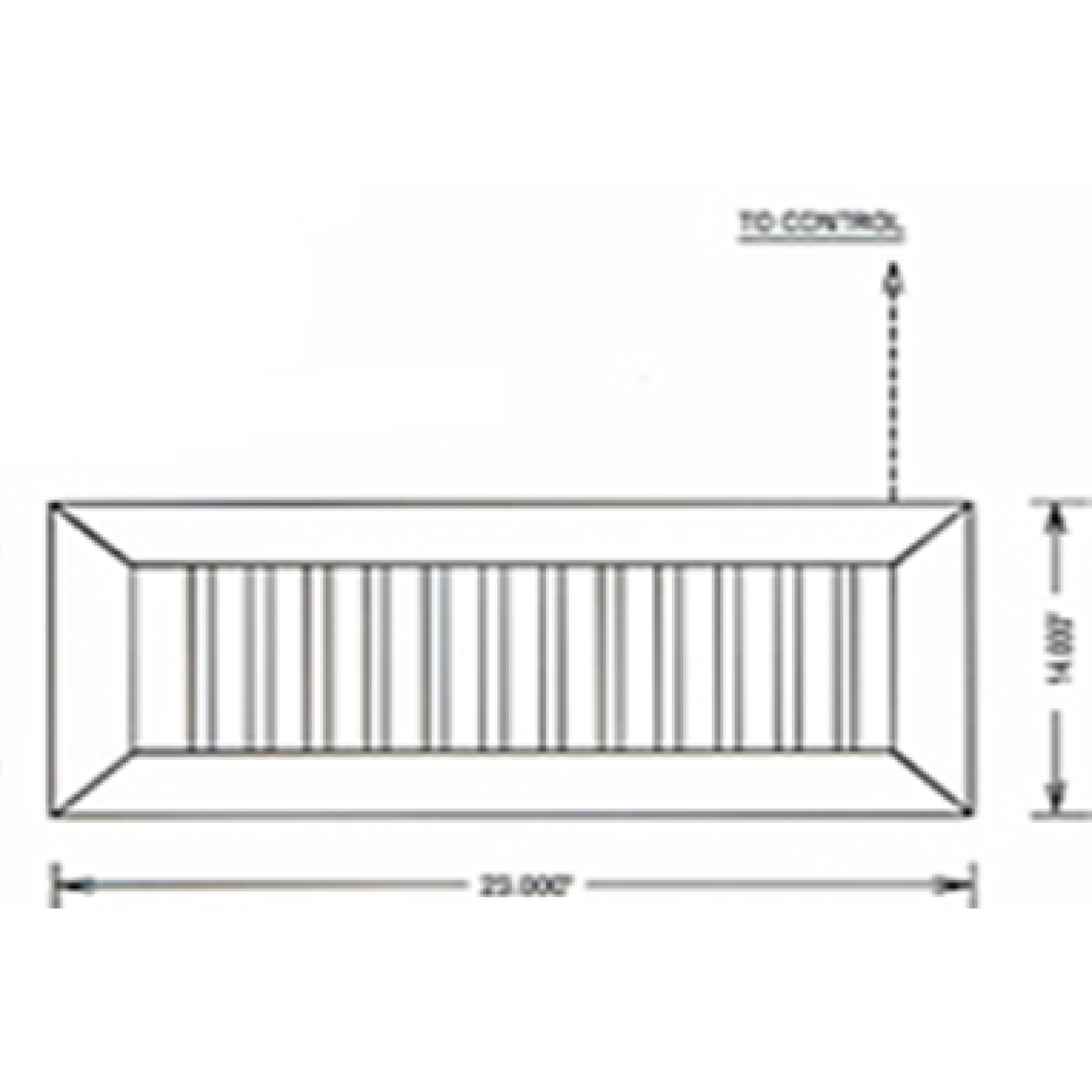
- Molded ramp edging (corrugated series) or molded blunt edge (smooth series); heavy-duty mats include extruded aluminum 2.000" ramp edging, 0.750" blunt edging, and a conduit connector for securing larger layouts
- Installation and wiring documentation sheet
A safety relay, PLC safety module, or machine-safety controller is required to complete the safety system and is not included — a safety mat alone does not constitute a safety system. For fail-safe machine protection, Recora specifies the FSC-6R monitoring relay, which brings a 4-wire heavy-duty mat system up to Safety Category 3. PowerSafe can supply and integrate the correct controller as part of a turnkey solution.
- Output Options
- Switch type: single-pole, single-throw (SPST), normally open, momentary contact
- Actuates on 10–15 lb applied load
- Standard lead wire: 6 ft, 18 AWG, 2-conductor, rated 300 V / 7 A
- Dual-lead (HD) versions for connection to a Fail-Safe Control Unit; 4-conductor leads optional
- Operating power: 12 W at 24 V AC or DC
- Series Options:
- Series 12H & 30H — thin (3/8"), corrugated surface with molded ramp edging
- Series 15H — thin (3/8"), smooth surface with molded blunt edge
- Series 14H — standard-duty area coverage in a wide range of stock sizes
- Series 14HD / 14EHD — heavy-duty and extra-heavy-duty for worker and vehicle protection; customizable to any size or shape with snap-on aluminum edging
- Standard stock sizes range from roughly 8 × 24 in up to 35.5 × 60 in; custom sizes and shapes available to order
- Standard color black; brown and yellow available
- Cascade Capacity
- Multiple mats can be linked and edged together with snap-on aluminum connectors to cover large or irregular areas, including cutouts around machine legs, posts, and walls.
- Zone size and layout must be defined by the risk assessment for the protected machine.
Mat Does Not Detect / Fails to Trigger Stop
Isolating a failed mat in a series-wired system
- Note that all mats are wired in series — a single shorted mat can disable the string, so mats must be tested individually
- Disconnect the suspect mat (all conductors) and check resistance: a good mat reads infinite (open) with no load and ≤5 Ω under an operator's weight
- ≤5 Ω with no weight = shorted → replace the mat
- ∞ Ω under load = open (rare) — inspect for a broken lead or a screw driven through the wire; if none, recheck meter leads
- Visually inspect the surface first: dents or deformities often reveal the faulty mat without disassembly. The most common failure is a heavy object's corner dropped on the mat, denting the electrode and shorting itConfirm the mat lies completely flat on a stable surface with no folds, curls, or lifting
False Trips / Nuisance Activation
Machine stops with no operator present, or won't reset
- Inspect for contamination, standing liquid, or debris on or under the mat
- Check for surface wear or cover lift altering the mat's contact behavior
- Confirm edges and fasteners are secure and haven't shifted
- Review controller/relay configuration and diagnostic monitoring settings
Wiring & Control-System Issues
Safety relay or PLC not registering mat state
- Verify mat outputs are correctly wired into the safety relay / safety-PLC
- Check lead continuity and terminal connections for looseness or corrosion
- Confirm the monitoring controller (e.g., FSC-6R) is configured and reading the signal
- On dual-lead (HD) systems, confirm correct fail-safe wiring to the control unit
Fail-Safe Function Verification
Confirming the system responds to faults
- Periodically simulate a severed-lead and power-interruption condition and confirm the system enters a safe state
- Confirm the FSC-6R (or specified controller) trips as expected on fault
- Verify positive operation indicators / status LEDs on the controller show correct fault and run states
Physical Damage & Edge Termination
Degraded performance over time
- Inspect for frayed edges, cover lifting, or cracked molding
- Check aluminum ramp/blunt edging and conduit connectors for damage or loosening
- Confirm the mat's environmental rating matches actual floor conditions (e.g., vehicle traffic → heavy-duty series)
Zone Sizing & Placement
Coverage doesn't match the hazard
- Confirm mat footprint and location match the machine's risk assessment (approach distance, stop time, hazard geometry)
- Verify no gap allows a person to reach the hazard without loading the mat
Functional Testing (After Install or Maintenance)
- Walk the full mat area; confirm the machine enters a safe state under load
- Remove the load and confirm the machine only restarts under safe conditions
- Document test results
Preventive Maintenance
To avoid recurring issues, on a set interval (quarterly or semi-annually depending on traffic):
- Inspect the mat surface for wear, curling, or cover lift and clean off oil, coolant, and debris
- Check leads, connectors, and terminals for corrosion or loosening
- Confirm mounting and edging remain secure
- Verify correct trip-and-reset behavior across the full surface
Fault Tracking & Continuous Improvement
- Log every trip and fault (date, location on mat, conditions, controller indicators)
- Watch for patterns — repeated false trips or missed detections often point to contamination, wear, loosening wiring, or undersized zones
- Use the data to find root causes and adjust maintenance or mat selection
- Keep installation manuals, wiring diagrams, test logs, and maintenance records accessible for audits and risk assessments