
Overview
JAKA collaborative robots (cobots) are designed to work safely alongside operators while improving manufacturing flexibility, consistency, and efficiency. Unlike traditional industrial robots that often require large safety fences and complex integration, collaborative robots provide a more compact and adaptable automation solution for many manufacturing environments.
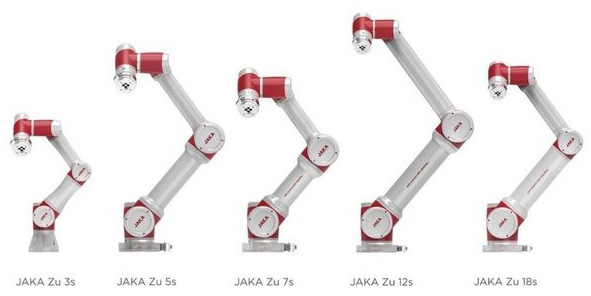
PowerSafe Automation provides turnkey support for JAKA cobot applications including:
- Pick & Place
- Welding & Soldering
- Sanding & Finishing
- Machine Tending
- Quality Inspection
- Gluing & Sealing
- Assembly and Screwing
- Packaging & Palletizing
Our approach focuses on practical automation solutions that manufacturers can scale over time without overcomplicating operations.
Check out our JAKA playlist on YouTube
Why Use JAKA Cobots?
Manufacturers are increasingly challenged by labor shortages, repetitive manual tasks, ergonomic concerns, and the need for flexible production environments. JAKA collaborative robots help bridge the gap between manual labor and full-scale automation.
Common Reasons Companies Choose JAKA Cobots
- Improve operator ergonomics
- Increase production consistency
- Reduce repetitive tasks
- Support labor shortages
- Improve flexible manufacturing
- Quickly redeploy automation
- Simplify operator interaction
- Reduce footprint compared to traditional robotics
- Improve machine uptime
- Support scalable automation initiatives
Collaborative robots are especially effective for operations needing quick changeovers, low-to-medium volume production, and adaptable manufacturing layouts.
Key Features
Compact Collaborative Design
JAKA cobots are designed for close operator interaction while maintaining a smaller footprint than traditional industrial robots.
Flexible Deployment
Mount cobots on:
- Pedestals
- Mobile carts
- Workstations
- Machine frames
- Conveyor systems
- T-slot aluminum structures
User-Friendly Programming:
- Simplified programming and teaching methods help manufacturers reduce deployment complexity and improve operational flexibility.
Integrated Safety Functions
- Collaborative robot technology includes safety-focused operating modes designed to support safer human interaction applications.
Lightweight and Efficient
- Compact robot arms allow for easier installation and redeployment across manufacturing processes.
Quick-Turn Automation
- PowerSafe Automation focuses on practical applications that can be implemented efficiently without requiring full custom production cells.
Common Applications
Machine Tending
- Load and unload CNC machines, presses, or manufacturing equipment while improving consistency and reducing operator fatigue.
Pick-and-Place Automation
- Automate repetitive part movement between conveyors, fixtures, and workstations.
Assembly Assistance
- Support repetitive assembly tasks requiring consistency and ergonomic improvement.
Packaging Operations
- Improve repetitive packaging, sorting, and product handling applications.
Inspection and Quality Control
- Integrate cameras or inspection tools to assist with repetitive visual inspection tasks.
Flexible Manufacturing Cells
- Deploy mobile collaborative robot systems that can be moved between production areas.
Benefits
Improved Manufacturing Flexibility
- Cobots can adapt to changing production requirements more easily than traditional fixed automation.
Reduced Ergonomic Risk
- Help reduce repetitive motion and awkward operator tasks.
Faster Automation Deployment
- Simplified systems can often be integrated faster than traditional robotics projects.
Better Space Utilization
- Compact robot systems help reduce factory floor footprint requirements.
Scalable Automation Strategy
- Manufacturers can start small and expand collaborative automation over time.
Enhanced Productivity
- Reduce repetitive manual handling while improving operational consistency.
How It Works
PowerSafe Automation follows a practical engineering-led integration process for collaborative robot applications.
Step 1 — Application Review
We review:
- Part handling requirements
- Machine interaction
- Operator involvement
- Safety considerations
- Production goals
Step 2 — System Design
Our team develops:
- Basic layouts
- End-of-arm tooling concepts
- Electrical integration plans
- Safety considerations
- Cart or pedestal designs
Step 3 — Build and Integration
Systems may include:
- JAKA cobot
- Controller
- Pneumatic utilities
- Electrical utilities
- HMIs
- Safety devices
- T-slot framing
- Mobile structures
Step 4 — Startup and Support
PowerSafe Automation provides installation assistance, startup support, and operational guidance to help customers successfully implement collaborative automation.
Installation and Support
PowerSafe Automation provides turnkey support for collaborative robot systems including:
- Application engineering
- Mechanical integration
- Electrical integration
- Safety reviews
- Custom pedestals and carts
- Pneumatic and utility integration
- Operator interface support
- Nationwide installation support
- Startup assistance
- Machine safety integration
Our team focuses on helping manufacturers implement automation that aligns with operational goals without overengineering the solution.
Safety and Compliance
Collaborative robot systems should always be evaluated through a proper machine safety and risk assessment process.
Applicable standards may include:
- ANSI/RIA R15.06
- ISO 10218
- ISO/TS 15066
- OSHA 1910.212
- ANSI B11 Standards
- NFPA 79
PowerSafe Automation helps manufacturers integrate collaborative robot systems with appropriate safeguarding measures including:
- 3d safety radars
- Safety laser scanners
- Safety light curtains
- Interlocked guarding
- Safety controls
- Risk reduction strategies
- Functional safety integration
Collaborative does not mean risk-free. Proper application review and safeguarding remain critical to achieving safer automation solutions.
Related Solutions
Pair JAKA Cobots With:
- Machine safety guarding
- Mobile workstations
- T-slot aluminum framing
- Safety scanners
- Conveyor systems
- Industrial HMIs
- Pneumatic tooling
- Machine tending systems
- Flexible manufacturing layouts
Frequently Asked Questions
What industries use JAKA collaborative robots?
JAKA cobots are commonly used in automotive, packaging, machining, assembly, material handling, plastics, and general manufacturing applications.
Can collaborative robots work without guarding?
Some collaborative applications may operate with reduced safeguarding, but every application requires a machine-specific risk assessment to determine appropriate risk reduction measures.
Are JAKA cobots good for small manufacturers?
Yes. Collaborative robots are often well suited for manufacturers seeking flexible automation without large traditional robotic system costs.
Does PowerSafe Automation build complete robotic cells?
PowerSafe Automation focuses on practical collaborative robot integration solutions including carts, pedestals, tooling integration, controls, and safety systems designed around customer operations.
Ready to Explore Collaborative Automation?
Improve flexibility, ergonomics, and manufacturing efficiency with collaborative robot solutions integrated by PowerSafe Automation.