
An Allen-Bradley Trapped Key Switch System is a mechanical safety interlocking solution designed to help control access to hazardous machine areas by enforcing a safe sequence of operation. These systems use trapped keys to isolate hazardous energy, prevent unexpected machine startup, and ensure guards, gates, or doors cannot be opened until equipment reaches a safe condition.
Trapped key systems are commonly used in manufacturing environments where personnel may need routine access to machines, robotic cells, conveyors, presses, mixers, or high-inertia equipment. By combining mechanical interlocking with machine safety procedures, trapped key systems help reduce human error while improving operational safety.
PowerSafe Automation integrates trapped key systems into custom machine guarding and safety control solutions tailored to customer operations, machine layouts, and risk reduction objectives.
Download the Trapped Key Switch brochure
Why Use a Trapped Key Switch System?
Many industrial machines contain hazardous motion, stored energy, or dangerous operating zones that cannot rely solely on administrative procedures or standard lockout methods during routine access.
A trapped key system helps create a controlled safety sequence by physically preventing unsafe actions. Operators must follow a defined process before entering a hazardous area, helping improve consistency and reducing the likelihood of bypassing safeguards.
Common reasons manufacturers implement trapped key systems include:
- Controlling access to hazardous machine zones
- Preventing access before motion stops
- Improving lockout/tagout procedures
- Protecting maintenance and operations personnel
- Managing multiple access points safely
- Supporting safety procedures on legacy equipment
- Reducing reliance on operator memory or procedural-only controls
- Enhancing machine safety during setup, cleaning, or maintenance
These systems are especially valuable in facilities with high-risk equipment, multiple operators, or complex machine sequences.
How It Works
A trapped key switch system operates through a controlled sequence of key exchanges tied to machine conditions and energy isolation points.
Typical operation includes:
- The machine operates normally while the key remains trapped in the control switch.
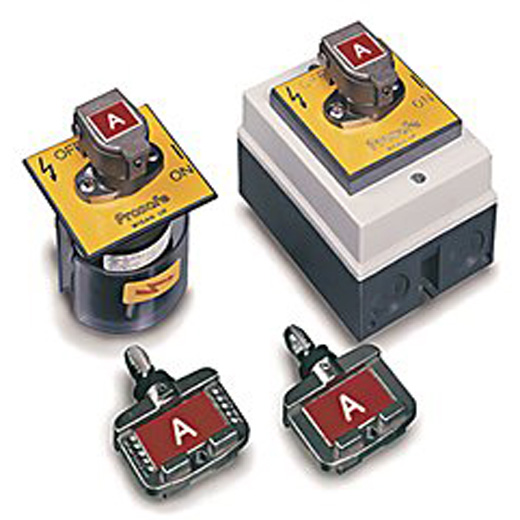
- The operator initiates a safe stop condition.
- Once the machine reaches a safe state, the key is released.
- The operator puts the key into a key exchange unit allowing for personal access keys to be released.
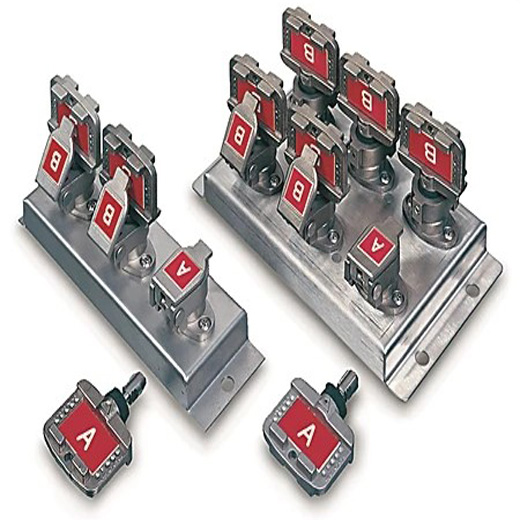
- The released exchange unit key(s) is used to unlock a gate, guard, or disconnect switch.
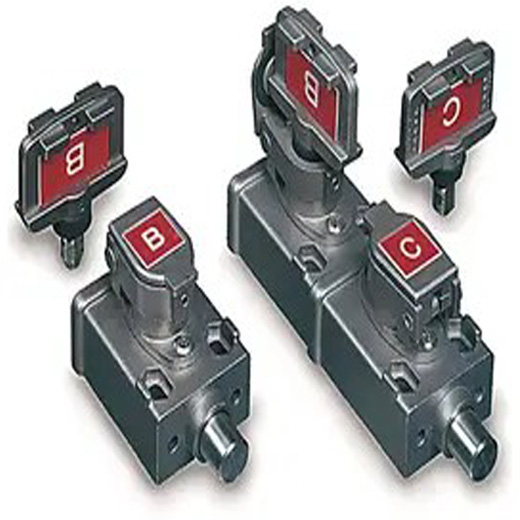
- Non-pass-through point-of-contact guards use a deadbolt that retains the key while the lock is open.
- Pass-through perimeter guards use a deadbolt that traps the exchange-unit key while releasing a personal-access key.
- While access is open, the machine cannot restart because the operating key has been removed.
- After maintenance or access is complete, the key must be returned in a reverse order to restore machine operation.
This sequence helps enforce safe access procedures while reducing opportunities for unsafe machine restart conditions.
Key Features
- Mechanical Key Transfer Logic: Keys remain trapped until a safe condition is achieved, forcing operators to follow the correct safety sequence.
- Energy Isolation Integration: Systems can integrate with disconnect switches, safety relays, control systems, and machine stop circuits.
- Multiple Access Control: Control several gates, doors, or hazardous zones using a single trapped key architecture.
- Rugged Industrial Design: Designed for demanding industrial environments including metal forming, packaging, automotive, food processing, and material handling applications.
- Expandable Safety Architecture: Systems can be configured for simple single-door applications or complex multi-zone machine safeguarding systems.
- Tamper-Resistant Operation: Mechanical key transfer helps reduce unauthorized access or safety bypassing.
Applications
Allen-Bradley trapped key systems are commonly used in:
- Robotic cells
- Conveyor systems
- Press lines
- Packaging equipment
- Roll-forming machinery
- Mixers and agitators
- High-inertia rotating equipment
- Material handling systems
- Automated manufacturing lines
- Electrical isolation procedures
- Maintenance access points
- Multi-cell production systems
These systems are frequently combined with:
- Physical machine guarding
- Safety light curtains
- Safety laser scanners
- 3d safety radars
Benefits
- Improved Personnel Safety: Helps prevent access to hazardous areas until dangerous motion or energy is removed.
- Reduced Human Error: Mechanical sequencing reinforces proper safety procedures without relying entirely on operator decisions.
- Better Control of Hazardous Access: Ensures gates, doors, or panels remain secured until safe conditions are achieved.
- Enhanced Lockout Procedures: Supports machine isolation strategies during servicing and maintenance.
- Flexible Integration: Can be incorporated into both new equipment and existing legacy machine retrofits.
- Increased Operational Confidence: Provides a visible and controlled safety process for operators, maintenance personnel, and safety managers.
Installation and Support
PowerSafe Automation provides turnkey support for trapped key switch system integration, including:
- Machine safety assessments
- Risk reduction recommendations
- Custom safety system design
- Electrical and mechanical integration
- Safety control modifications
- Machine guarding integration
- Installation support
- Validation and commissioning assistance
- Based on the application, a trapped key system key code log is recommended. This helps to prevent duplicate key codes from being used across multiple machines, maintain a centralized trapped key management log for all installed systems.
Our engineering-led approach helps manufacturers implement practical machine safety solutions that align with operational requirements and production goals.
Compliance and Standards
Trapped key systems may support machine safety strategies aligned with recognized industrial safety standards and regulations, including:
- OSHA 1910.212
- OSHA Lockout/Tagout Requirements
- ANSI B11 Series Standards
- ISO 13849-1
- NFPA 79
- IEC 62061
Proper implementation should always be evaluated through a machine guarding assessment.
PowerSafe Automation helps manufacturers identify appropriate safeguarding methods and integrate trapped key systems into broader machine safety programs designed to reduce risk and improve operational safety.