Guarding the Forming & Sizing Die Stand Areas with Trapped Key Interlocks, Light Curtains, and Controlled Setup Modes
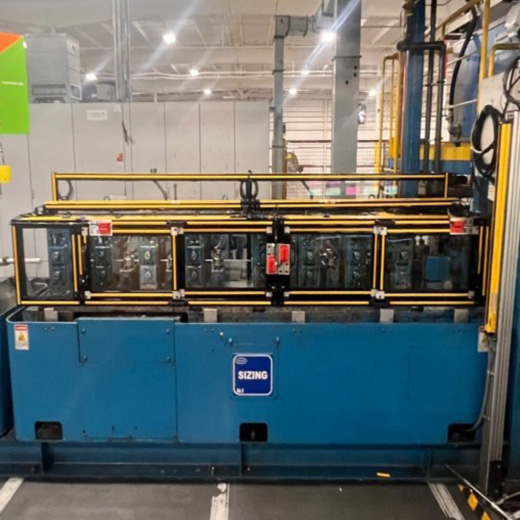
Machine safety on roll forming equipment requires more than simply adding barriers around moving components. Effective safeguarding must allow operators and maintenance personnel to safely thread, adjust, troubleshoot, and maintain the mill while reducing exposure to rotating rolls, pinch points, ingoing nip hazards, and unexpected startup conditions.
The following methodology outlines a practical, user-friendly machine safety approach for roll forming machines using:
- Production / Run Mode (full speed):
- Sliding machine guarding doors or hood-style hinged safety doors
- Trapped-key interlock system
- Sliding machine guarding doors or hood-style hinged safety doors
- Setup Mode (speed-limiting / safe stop condition):
- Keyence safety light curtains
- Jog / reset pendant
- General Infrastructure and Logic:
- Emergency rope pull systems
- Programmable safety relay controls
- Maintenance mode control logic
- Stack light safety indication
This approach is commonly used on legacy and modern roll forming equipment where operators need recurring access to die stand adjustment locations throughout the forming and sizing sections.
Why Roll Forming Machines Require Advanced Guarding
Roll forming machines contain multiple hazards including:
- Rotating rollers and shafts
- Pinch and crush points.
- In-running nip hazards
- Entanglement risks
- Unexpected startup hazards
- Flying debris or material whip hazards
- Adjustment and threading exposure points
Because operators frequently interact with the machine during setup and threading, safeguarding systems must balance:
- Safety
- Productivity
- Maintainability
- Troubleshooting capability
- OSHA and ANSI compliance objectives
This methodology helps create layered risk reduction rather than relying on a single safeguarding device.
Machine Guarding Methodology Overview
Primary Safety Components
The system consists of:
Physical Guarding
- Sliding machine guard doors around forming and sizing sections
- Fixed guarding where access is not required.
- Adjustment access cutouts for socket extensions
- Conduit protection for exposed wiring areas
Safety Devices
- Keyence 45” safety light curtains
- Emergency rope pull system.
- Trapped key exchange system.
- Programmable safety relay (Keyence GC-1000R)
- Four-color LED stack lights
- Keyed maintenance mode selector switches
Operational Safety Functions
- Speed-limited setup mode.
- Safe adjustment access methodology
- Controlled restart behavior
- Emergency stop functionality.
- Maintenance bypass time limitation
Sliding Guard Door Methodology
Purpose of Sliding Safety Doors
Sliding guard doors protect personnel from exposure to rotating die stands and moving machine components during normal production operation.
Benefits include:
- Controlled access to hazardous areas
- Visual observation through guarding panels
- Easier operator access during setup
- Reduced floor space requirements versus swing doors
- Better usability on long roll forming lines.
The doors use trapped key deadbolt mechanisms instead of wired interlock switches mounted directly on the moving mill base.
Trapped Key Safety System Explained
Why Trapped Key Systems Are Used
Traditional wired safety switches mounted directly on roll forming bases are often exposed to:
- Vibration
- Oil and coolant contamination.
- Mechanical damage
- Forklift impacts
- Wire flexing failures
A trapped key system eliminates most field wiring on moving guard sections.
How the Trapped Key System Works
Step 1 — Machine Running Condition
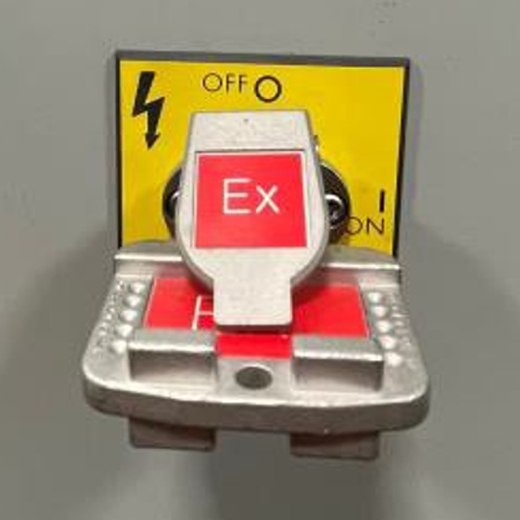
The electrically interlocked trapped key remains in the “ON” position.
This signifies:
- All guards are installed.
- Hazardous access points are secured.
- Safety circuit conditions are satisfied.
The programmable safety relay allows machine operation.
Step 2 — Releasing Guard Access Keys
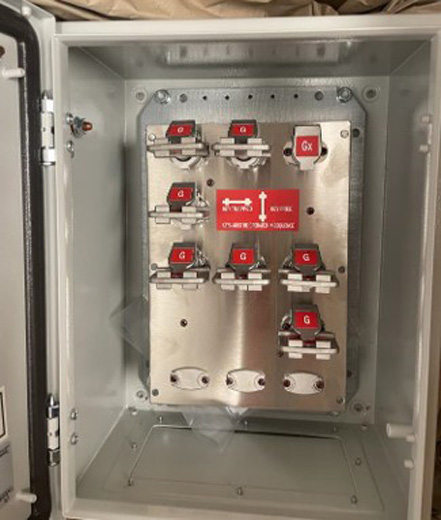
When access is required:
- The operator turns the trapped key to the “OFF” position.
- The master key is released.
- Secondary keys become available through the trapped key exchange unit.
These secondary keys unlock individual deadbolt latches on the guard doors.
Step 3 — Guard Door Access
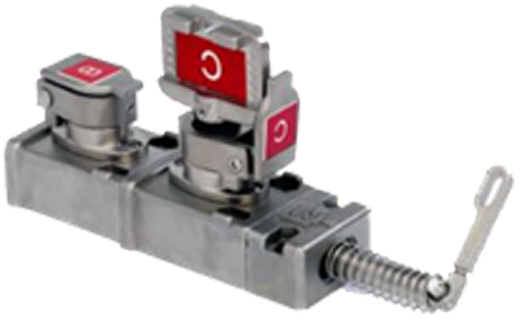
Once the secondary keys are inserted:
- Guard doors can open.
- Personnel gain access to adjustment points.
- The machine safety system changes operating states
This design prevents the machine from running in full production mode while guards are removed.
Benefits of Trapped Key Systems on Roll Formers
Reduced Wiring Damage
No wiring is required on the removable or sliding machine guard sections.
Improved Reliability
Mechanical trapped key systems are highly durable in harsh industrial environments.
Better Maintenance Longevity
Fewer sensors and cables exposed to:
- Coolant
- Oil
- Vibration
- Material impact
Controlled Access
The key exchange process forces a deliberate sequence for entering hazardous areas.
Light Curtain Safety Methodology
Purpose of the Light Curtains
Keyence 45” safety light curtains are installed outside the guarding structure using stand-offs and rail-mounted supports.
These devices protect operator access points during:
- Setup
- Threading
- Adjustment operations
How the Light Curtains Function
When a light curtain beam is interrupted:
- The mill stops completely.
- The E-stop safety output engages.
- Hazardous motion is removed.
After the operator exits the sensing field:
- The safety circuit resets internally.
- The mill DOES NOT automatically restart production motion.
- A separate start command must be pressed at machine controls.
This prevents unexpected automatic machine restart.
Important Safety Principle — No Automatic Restart
Although the light curtain interlock may reset automatically internally, the machine itself still requires a manual restart command.
This methodology helps align with:
- OSHA machine safeguarding expectations
- ANSI B11 risk reduction principles
- Prevention of unexpected startup conditions
Setup Mode Methodology
Why Setup Mode Is Necessary
Roll forming equipment requires:
- Threading material through rollers
- Adjusting die stands
- Fine tuning during operation
Completely locking out the machine during every adjustment would severely reduce productivity.
A controlled setup methodology allows limited operation while maintaining reduced risk.
Setup Mode Sequence
Step 1 — Interrupt Light Curtain
The operator enters the protected area.
The machine:
- Stops completely.
- Removes hazardous motion.
Step 2 — Perform Adjustment
Personnel perform:
- Threading
- Roll adjustments
- Inspection
- Troubleshooting
Step 3 — Exit Light Curtain Zone
Once clear:
- The light curtain safety field restores.
- The safety system becomes satisfied.
Step 4 — Restart Required
The operator must intentionally press start again to resume motion.
This prevents unintended startup.
Speed Limitation During Setup
Maximum Speed Limitation
When the trapped key system is in the guard-removed state and the light curtains are active:
The mill speed is limited to:
60 Feet Per Minute (FPM)
This speed limitation helps satisfy OSHA hand-speed safety distance requirements associated with presence-sensing devices.
Operators can still run the mill anywhere between:
- 0 to 60 FPM
but cannot exceed the setup-safe speed threshold.
Why Speed Reduction Matters
Safety light curtains rely on:
- Detection time
- Safety relay response time
- Machine stopping time.
- Human approach speed
Reducing machine speed lowers stopping distance requirements and improves safeguarding effectiveness during setup tasks.
Maintenance Mode Methodology
Purpose of Maintenance Mode
A keyed “Maintenance Mode” selector switch is available strictly for emergency troubleshooting situations.
Typical use case:
- Damaged light curtain
- Extended production downtime risk
- Temporary troubleshooting necessity
This mode was requested specifically by the safety department.
Important Maintenance Mode Restrictions
Keyed Access
Each mill uses differently keyed selector switches to prevent unauthorized transfer between machines.
Time Limited
The bypass mode is active for:
Maximum 6 Hours Per Interval
This prevents indefinite bypassing of safety systems.
Restricted Use
Maintenance mode should only be used:
- Under controlled procedures
- By authorized personnel
- During abnormal troubleshooting conditions
It is NOT intended for normal production operation.
Emergency Rope Pull Safety System
Purpose of Rope Pulls
Emergency rope pull systems provide personnel with emergency stopping capability along long sections of the roll forming line.
Benefits include:
- Fast access to E-stop activation
- Full-length emergency coverage
- Improved operator accessibility
- Better response during entanglement events
Rope pulls are installed along:
- Forming sections
- Sizing sections
Stack Light Safety Indication System
Each forming and sizing section includes a four-color LED stack light for immediate machine status visibility.
Stack Light Legend
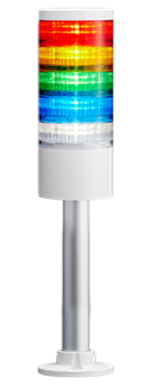
Red
E-stop output engaged to the mill.
Orange
Maintenance Mode active
Green
E-stop output disengaged / machine capable of operation.
Blue
Light curtains clear
This visual communication helps operators quickly identify machine safety conditions.
Safety Controller Architecture
Keyence GC-1000R Safety Controller
The safety system uses a Keyence GC-1000R programmable safety relay/controller.
The controller manages:
- Light curtain inputs
- E-stop circuits
- Rope pulls circuits.
- Trapped key status logic.
- Maintenance mode logic
- Restart logic
- Speed-limiting conditions.
- Stack light outputs.
This centralized architecture improves:
- Diagnostics
- Expandability
- Troubleshooting capability
- Safety logic management
Pendant Control Methodology
Wired pendants are added to:
- Forming sections
- Sizing sections
- Multiple mills
Pendants are mounted to customer-supplied overhead reels with pulled wire.
Benefits include:
- Better operator positioning
- Safer adjustment capability
- Reduced need to reach across hazards.
- Improved setup ergonomics
The jog pendant remains active within the safety system during setup operations.
Coolant Pump Scope Clarification
The coolant pump operation remains unchanged within the current scope of work.
This means:
- Existing coolant functionality is retained.
- Safety integration modifications do not currently alter coolant logic.
Applicable OSHA & ANSI Standards
This methodology supports risk reduction concepts commonly associated with:
- OSHA 1910.212 — General Machine Guarding
- ANSI B11.0 — Safety of Machinery
- ANSI B11.19 — Performance Requirements for Risk Reduction Measures
- ANSI B11.1 — Mechanical Power Presses (conceptually for safeguarding principles)
- ANSI/RIA safety integration concepts where applicable
- ISO 13849-1 concepts for control reliability and safety-related parts of control systems
Final compliance responsibility depends on:
- Risk assessment results.
- Stop-time performance.
- Validation testing
- Application-specific hazards
Advantages of This Roll Forming Safety Methodology
Improved Operator Safety
Layered safeguarding reduces exposure to rotating die stand hazards.
Reduced Wiring Failures
Trapped key systems eliminate vulnerable field wiring on moving guards.
Better Machine Uptime
Maintenance-friendly design improves long-term reliability.
Safer Setup Operations
Controlled threading and adjustment methodology reduces risk during normal interaction tasks.
Visual Safety Awareness
Stack lights provide immediate machine condition communication.
Enhanced Troubleshooting
Programmable safety control architecture improves diagnostics.
Reduced Damage Exposure
Conduit-protected wiring helps improve system longevity.
Conclusion
Roll forming machines present unique safeguarding challenges because operators routinely interact with hazardous motion during setup, threading, and adjustment tasks.
This machine safety methodology combines:
- Physical guarding
- Trapped key interlocking.
- Presence sensing
- Speed limitation
- Emergency stopping
- Safety-rated control logic
- Controlled maintenance access
to create a practical and durable safeguarding solution for forming and sizing sections.
Rather than relying on a single device, this layered approach helps improve:
- Safety performance
- Reliability
- Operator usability
- Maintenance practicality
- Long-term machine protection
while supporting real-world manufacturing operations on roll forming equipment.