
Two-hand controls for machine operation are designed to keep an operator’s hands away from a machine hazard during machine initiation or hazardous motion. They are commonly used on presses, welders, assembly machines, pneumatic fixtures, clamp stations, access door cycling, and other pinch-point applications.
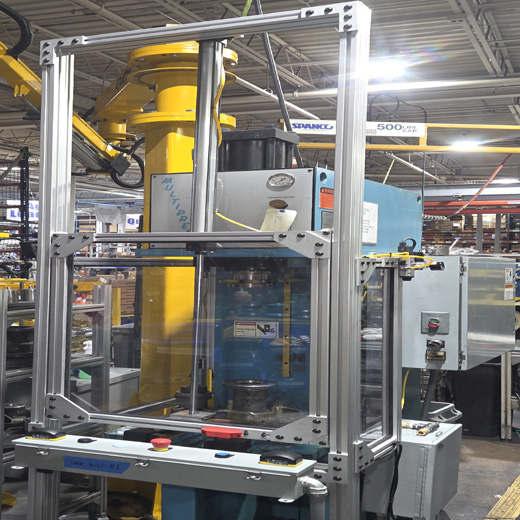
Having (2) buttons required to actuate a machine does NOT equal a true 2-hand control system.
This system requires:
- Two separate push buttons with proper distance of between 21” to 24” for ergonomics and bypass prevention
- The 21" requirement is for buttons on a single plane, but buttons mounted on different planes may be mounted closer.
- Barriers or guards between the buttons allow for closer mounting is there are space constraints.
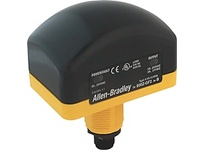
- Simultaneous actuation of approximately 0.5 seconds or less between button presses
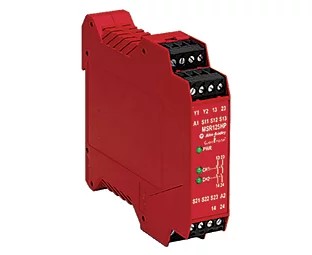
- Anti-tie-down and anti-repeat monitoring:
- An anti-repeat function prevents:
- A machine from cycling again until both 2-hand control buttons are fully released and pressed simultaneously for the next cycle.
- A machine from cycling again until both 2-hand control buttons are fully released and pressed simultaneously for the next cycle.
- An anti-tie-down relay verifies:
- Both buttons are pressed nearly simultaneously
- Neither button is stuck or taped down
- Both buttons are released before another cycle can begin
- If one button is held before the other:
- The machine should not cycle
- The operator must release both buttons and restart properly
- An anti-repeat function prevents:
- Proper safety distance from the hazard:
- Two-hand controls must be positioned far enough away so the operator:
- Cannot reach the hazard before hazardous motion stops
- The stop time measurement calculation often includes:
- Machine stop time
- Hand speed constant
- Additional penetration factors
- Common mistake:
- Buttons mounted directly on the machine frame near the pinch point
- The stop time measurement calculation often includes:
Without anti tie-down or anti-repeat protection, operators may attempt to bypass the system by taping, holding, wedging, or taping one button down permanently. That defeats the purpose of the safeguard.
Key ANSI & OSHA References
OSHA Regulations
- OSHA 1910.217 Mechanical Power Presses
- OSHA 1910.212 General Machine Guarding Requirements
OSHA requires protection against unintended operation.
ANSI Standards
- ANSI B11.19 – Performance Requirements for Risk Reduction Measures
- ANSI B11.0 – General Safety Requirements for Machines
These standards address:
- Concurrent operation
- Safety distance calculations
- Anti-repeat functionality
- Anti-tie-down functionality
- Control reliability
- Safeguarding performance requirements
- Protect Against Accidental Actuation
- Buttons should include:
- Palm-style mushroom buttons
- Guard rings or recessed mounting
- Clearly labeled stations
- Buttons should include:
- Require full release before restart prevents continuous cycling
- After each cycle:
- Both buttons must be released
- System resets before next initiation
Important Limitation
Two-hand controls only protect:
- The operator using the controls
They do NOT automatically protect:
- Nearby employees
- Maintenance personnel
- Secondary loading stations
Additional safeguarding may still be required:
- Fixed guarding
- Light curtains
- Area scanners
- Safety radars
- Interlocked barriers
- Safety mats
Quick Functional Test for True 2-Hand Anti-Tie-Down and Anti-Repeat Operation
A true 2-hand control system requires both buttons to be pressed simultaneously and prevents one button from being held or “tied down”. Monitor for an anti-repeat condition by actuating machine and continue holding buttons down through the cycle to ensure machine actuation does not repeat until the buttons are released and pressed again.
Simple Functional Test
- Press and hold Button #1
- While continuing to hold Button #1, press Button #2
- Observe the machine response
Correct Operation
- The machine should NOT actuate
- Both buttons must be released
- Operator must press both buttons again simultaneously to start a cycle
Failed Operation
If the machine actuates while one button was already held:
- The buttons are not properly tied together
- The system is not functioning as a true anti tie-down 2-hand control
- The operator may be able to bypass the safeguard
Additional Recommended Tests
Reverse the Sequence
Repeat the test by:
- Holding Button #2 first
- Then pressing Button #1
The machine still should NOT cycle.
Simultaneous Timing Test
Press both buttons naturally at nearly the same time.
Expected result:
- Machine actuates normally
Most anti tie-down relays require:
- Both buttons pressed within approximately 0.5 seconds of each other
Button Stuck Test
Hold one button continuously and attempt multiple cycles using only the second button.
Expected result:
- No machine actuation
- System should require both buttons released before restart
Why This Matters
Improperly wired or bypassed 2-hand controls can allow:
- One-handed machine operation
- Reach into hazard areas during cycling
- Increased risk of crush, pinch, shear, or amputations
A properly functioning system helps ensure both hands remain away from the hazard during machine initiation.