Clear polycarbonate panels are widely used in machine guarding, safety enclosures, and industrial viewing windows because of their high impact resistance and optical clarity. However, improper cleaning is one of the most common causes of scratches, surface hazing, and reduced visibility over time. This guide outlines the recommended cleaning solution, cloth type, and best practices to maintain long-term clarity and performance.
Recommended Cleaning Solution for Polycarbonate Panels
The safest and most effective cleaning solution for clear polycarbonate is a mild soap or detergent mixed with warm water. This solution removes dust, oils, and light contaminants without chemically attacking the surface.
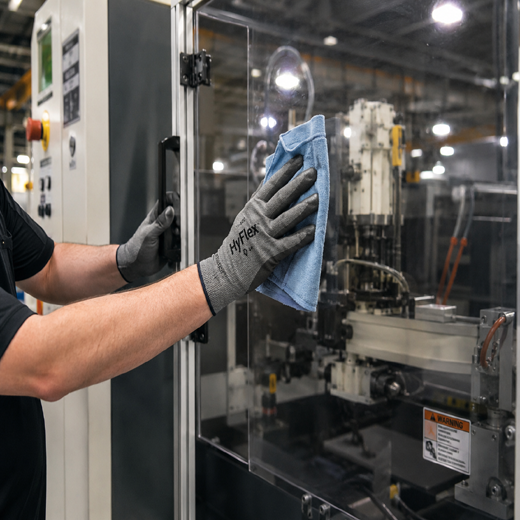
Best practice:
- Use a few drops of mild dish soap per gallon of warm water.
- Rinse thoroughly with clean water after washing.
- Allow the panel to air dry or gently wipe dry with an approved cloth.
Avoid at all costs:
- Ammonia-based cleaners (e.g., typical glass cleaners)
- Alcohol, acetone, MEK, or solvent-based products
- Strong degreasers or industrial cleaners not rated for plastics.
These chemicals can break down the surface of polycarbonate, causing permanent clouding, micro-cracking, or hazing that cannot be repaired.
Proper Cloths and Wipes to Prevent Scratching
The type of cloth used is just as important as the cleaning solution.
Approved cloths:
- Soft microfiber cloths
- Clean, 100% cotton cloths (non-treated, non-linting)
Cloths to avoid:
- Paper towels or shop towels
- Abrasive pads or scrub brushes
- Reused rags that may contain metal shavings or grit.
Paper products and abrasive materials can introduce fine scratches that accumulate over time, reducing visibility and making panels appear dull even when clean.
Step-by-Step Cleaning Process (Best Practice)
- Rinse the panel with clean water to remove loose debris.
- Apply the mild soap and warm water solution.
- Gently wipe using a microfiber or cotton cloth with light pressure
- Rinse thoroughly to remove soap residue.
- Dry using a clean microfiber cloth or allow to air dry.
Never dry wipe a dusty polycarbonate panel, as trapped particles can act like sandpaper on the surface.
Why Proper Cleaning Matters in Machine Guarding
In industrial environments, scratched or hazed polycarbonate panels can:
- Reduce visibility into machines and processes.
- Encourage operators to open or bypass guards.
- Diminish the professional appearance of safety installations.
- Shorten the service life of guarding components.
Following proper cleaning procedures helps preserve optical clarity, safety compliance, and long-term durability of polycarbonate machine guarding systems.
Key Takeaway
To clean clear polycarbonate panels without scratching or hazing, always use mild soap and warm water paired with a soft microfiber or 100% cotton cloth. Avoid ammonia-based cleaners, solvents, and paper products to ensure long-lasting clarity and performance in industrial and machine safety applications.
While OSHA 1910.212 and the ANSI B11 series do not prescribe a numeric “clarity” requirement, both clearly establish expectations that visibility through guarding must be maintained when transparent panels are used as part of a safeguarding system.
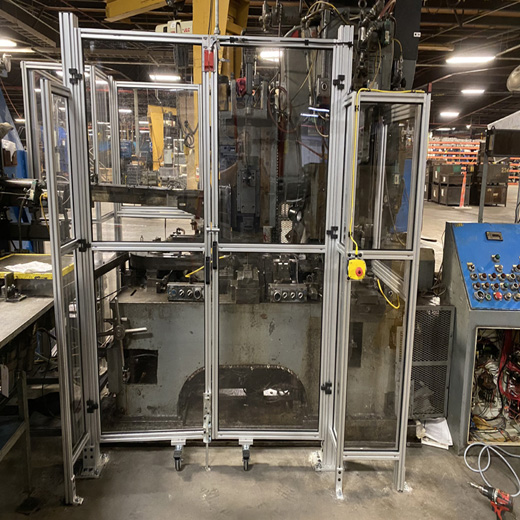
Below are the practical compliance takeaways safety professionals and auditors consistently applying.
OSHA 1910.212 — General Industry Machine Guarding
Key expectation: Guards must protect operators without creating new hazards or encouraging unsafe behavior.
Practical OSHA Takeaways for Clear Panels
- Visibility matters: If a transparent guard becomes hazed, scratched, or clouded to the point that operators cannot clearly see the hazard zone or process, it can be considered a secondary hazard.
- Bypass risk: Poor visibility that leads operators to open, defeat, or remove guards is frequently cited during audits as a guarding effectiveness failure, not just a housekeeping issue.
- Maintenance responsibility: OSHA expects guarding to be maintained in a condition that continues to provide protection, which implicitly includes maintaining visibility when clear panels are chosen.
Inspector mindset: “If the guard prevents the operator from safely observing the process, it may not be functioning as intended.”
ANSI B11 Series — Risk-Based Safeguarding Expectations
ANSI B11 standards go further by linking visibility directly to risk reduction and human behavior.
Key ANSI B11 Expectations
- Guards shall not unnecessarily obstruct the operator’s view of the point of operation or hazard zone.
- Safeguarding design must consider foreseeable misuse, including guard removal due to poor visibility.
- Risk reduction hierarchy favors solutions that maintain visibility while controlling exposure.
Practical ANSI Interpretation
- Clear panels are acceptable only if clarity is maintained over time.
- Scratched or hazed panels may:
- Reduce hazard awareness.
- Increase likelihood of unsafe intervention
- Undermine the original risk assessment assumptions.
- Panels that no longer provide effective visibility should be replaced, not “worked around.”
What Auditors and Safety Engineers Commonly Expect
When clear polycarbonate is used in a safety application, auditors typically look for:
- Can the operator clearly see moving hazards or stoppage confirmation?
- Is the panel free from excessive scratching, haze, or chemical damage?
- Does visibility support safe operation, setup, and troubleshooting?
- Is there evidence of proper cleaning and maintenance practices?
If the answer to any of these is “no,” the guarding system may be flagged as ineffective, even if it is mechanically intact.
Best-Practice Compliance Guidance
To stay aligned with both OSHA and ANSI expectations:
- Specify polycarbonate-safe cleaning procedures in maintenance instructions.
- Train operators and maintenance staff on approved cleaners and cloths
- Inspect clear panels during routine safety audits.
- Replace panels that no longer provide clear visual access.
- Treat visibility as a functional safety requirement, not an aesthetic preference
Bottom Line OSHA 1910.212 and ANSI B11 expect transparent guards to remain transparent. If a clear panel no longer allows safe observation of the hazard or process, it can compromise safeguarding effectiveness and increase audit risk — even without a specific numerical clarity requirement.