
Anonymous U.S. Manufacturer | Engineered by PowerSafe Automation
Project Overview
An anonymous precision manufacturing customer was operating a servo-driven indexing dial table used for automated assembly and inspection.
The system had been in service for over a decade — mechanically reliable, but protected by outdated, low safety category safeguarding methods that no longer aligned with modern standards such as:
- OSHA 1910.212
- ANSI B11.19
- ISO 13849-1
PowerSafe Automation was brought in to:
- Perform a risk assessment.
- Identify compliance gaps.
- Upgrade the safeguarding architecture.
- Improve reliability and reduce nuisance downtime.
The engineered solution centered around the MC Model safety radar from Inxpect, integrated into a modern Category 3 / PL d safety architecture.
The Original Condition: Legacy Guarding Risks
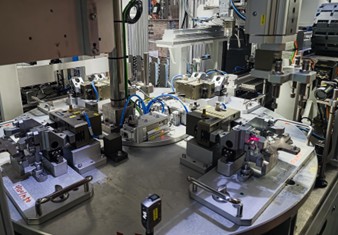
The dial table featured:
- Servo-controlled rotary indexing
- Multiple assembly stations
- Manual load/unload positions
- Pneumatic tooling
- Rotating tooling fixtures
Existing Safeguarding Included:
- Single-channel interlocked doors
- Basic E-stops wired in series.
- No safety-rated control reliability
- Category B architecture
- No monitored reset
Key Risks Identified
- Access to moving indexing plate during motion.
- Pinch points between tooling stations
- Unexpected restart after guard closure
- Failure-prone single-channel safety circuits
The biggest concern?
The system would continue operating if certain components failed.
This did not meet modern expectations for control reliability or redundancy.
Risk Assessment Findings
PowerSafe Automation conducted a Task-Based Risk Assessment (TBRA).
Hazard Severity:
Potential for crushing, amputation, and severe lacerations.
Exposure Frequency:
High — operators interacted with the load station continuously.
Avoidance Possibility:
Low during automatic indexing.
Required Performance Level: PL d (Category 3)
The existing system fell well below this requirement.
Why the MC Model Radar from Inxpect?
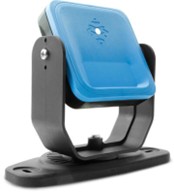
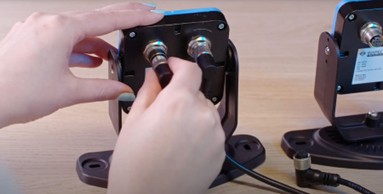
The MC Model from Inxpect was selected because it offers:
- SIL2 / PL d capability
- Compact design ideal for tight machinery envelopes
- Volumetric motion detection
- Immunity to oil mist, vibration, dust
- Dynamic zone configuration
Unlike light curtains — which would require constant hard stops — the MC model allowed:
- Configurable safety zones
- Controlled stop logic
- Faster cycle recovery
For a high-cycle servo-driven dial table, radar provided protection without destroying productivity.
Engineered Safety Architecture
PowerSafe Automation redesigned the safeguarding system with:
Zoned Protection Strategy
- Zone A (Approach Zone): Reduced speed / Safe Limited Speed
- Zone B (Hazard Zone): Immediate safe stop
Safety Control Upgrade
- Dual-channel safety inputs
- Safety PLC integration
- Monitored reset.
- Fault diagnostics
- Category 3 wiring architecture
Mechanical Enhancements
Selective aluminum extrusion guarding:
- Defined operator load areas
- Prevented rear access.
- Eliminated blind spots.
Technical Improvements
| Feature | Legacy System | Upgraded System |
| Safety Category | Cat B | Cat 3 |
| Redundancy | None | Dual channel |
| Reset | Auto | Monitored manual |
| Fault Detection | No | Yes |
| Detection Type | Door-only | Volumetric radar |
The system now meets modern control reliability expectations.
Measurable Results
- 27% reduction in nuisance stops.
- 0 bypass incidents post-upgrade
- Improved uptime due to diagnostic feedback
- Verified PL d validation documentation.
- Improved operator confidence
Unexpected benefit: Maintenance could now identify safety circuit faults before production was impacted.
Why Radar Instead of More Fencing?
For indexing dial tables:
- Operators are continuously loading/unloading.
- Frequent door cycling slows throughput.
- Optical devices are vulnerable to contamination.
- Floor mats wear out.
Radar allowed:
- Open ergonomic load area
- Controlled safe stopping.
- Faster cycle restart
- Reduced hardware wear
It modernized the safety approach without redesigning the entire machine.
Customer Feedback (Anonymous)
“We did not realize how exposed we were until PowerSafe walked us through the risk assessment. The upgrade improved safety and reliability at the same time.”
Strategic Takeaway
Many legacy indexing dial tables:
- Were installed before PL standards were common.
- Use single channel wiring.
- Lack fault detection.
- Create restart hazards.
Upgrading to a properly engineered PL d architecture using the MC Model radar from Inxpect allowed this customer to:
- Close compliance gaps
- Improve uptime.
- Reduce liability exposure.
- Extend equipment life.
Without replacing the machine.
Is Your Dial Table Outdated?
If your indexing table:
- Was built pre-2012.
- Uses single-channel safety wiring.
- Has basic door interlocks?
- Lacks monitored reset.
- Has no safety validation documentation?
It may not meet today’s expectations.
PowerSafe Automation engineers’ upgrades — not just guarding.