Volumetric Safety: How Inxpect 3D Safety Radar Is Changing Machine Safety

By:

Modern manufacturing environments continue to evolve with faster automation, collaborative robotics, autonomous systems, and increasingly compact production layouts. As these systems become more advanced, traditional machine safeguarding methods sometimes struggle to provide the flexibility, reliability, and productivity manufacturers need.

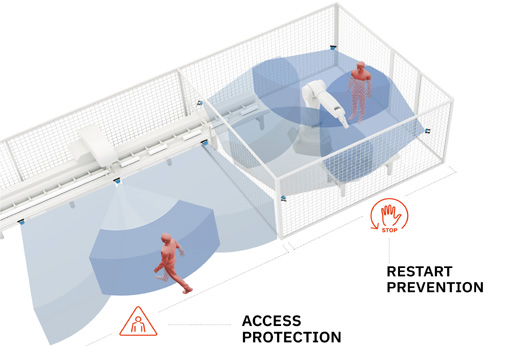
Volumetric Safety with Access Detection and Restart Prevention

That is where volumetric safety enters the conversation.

Volumetric safety is transforming how manufacturers protect operators around hazardous machinery by moving beyond flat, two-dimensional sensing technologies into intelligent three-dimensional detection zones. One of the leaders driving this innovation is Inxpect with its revolutionary 3D safety radar technology.

For manufacturers dealing with dust, smoke, vibration, debris, fluids, irregular machine layouts, robotic systems, or challenging environmental conditions, volumetric safety can provide a more adaptable and reliable safeguarding approach compared to traditional optical sensing devices.

In this article, we will explore:

  • What volumetric safety means
  • Why volumetric detection matters in industrial safety
  • Limitations of traditional safeguarding methods
  • How Inxpect 3D safety radar works
  • Real-world industrial applications
  • Benefits of radar-based safeguarding
  • How Inxpect Safety Studio software improves implementation and validation
  • Why volumetric safety is becoming the future of machine safeguarding

What Is Volumetric Safety?

Volumetric safety refers to a machine safeguarding approach that protects a three-dimensional space rather than only a line, plane, or perimeter.

Traditional safeguarding devices such as light curtains and laser scanners primarily monitor flat or two-dimensional areas. Volumetric safety systems monitor an actual volume of space, creating a configurable 3D protective zone around hazardous equipment.

This allows manufacturers to better detect:

  • Operator’s presence
  • Intrusion into dangerous areas
  • Movement within complex machine zones
  • Restart prevention conditions
  • Access into robotic cells
  • Unsafe positioning near machinery

Instead of monitoring only a single vertical plane or narrow scanning field, volumetric safety systems actively monitor the entire protected area.

The result is a more flexible and often more reliable approach to industrial machine safety.


Why Volumetric Safety Is Important

Manufacturing facilities face increasing pressure to improve both safety and productivity simultaneously.

Unfortunately, many traditional safeguarding methods create operational challenges such as:

  • Frequent nuisance trips
  • False alarms
  • Reduced access flexibility
  • Difficult installation requirements
  • Sensitivity to environmental contamination
  • Large guarding footprints
  • Downtime from sensor obstruction

Volumetric safety helps address these issues by allowing manufacturers to create intelligent 3D detection zones tailored to the actual hazard area.


According to Inxpect’s official technology overview, their radar systems can dynamically detect access and presence in hazardous areas while filtering out static objects and environmental disturbances.

This is especially important for industries where traditional optical safeguarding devices struggle due to:

  • Welding smoke
  • Dust
  • Oil mist
  • Water spray
  • Metal shavings
  • Dirty environments
  • Outdoor conditions
  • Complex robotic movement

Instead of relying on visible light or laser interruption, radar-based systems monitor spatial movement using advanced radar technology.


The Limitations of Traditional Safety Devices

Traditional safeguarding technologies still play a major role in industrial safety and remain highly effective in many applications. However, they can face limitations in demanding environments.

Safety Light Curtains

Safety light curtains create a vertical protective plane using infrared beams.

Challenges can include:

  • Sensitivity to contamination
  • Alignment issues
  • Limited volumetric coverage
  • Difficulty protecting irregular spaces
  • Potential nuisance trips

Laser Scanners

Laser scanners are commonly used in robotics and AGV applications.

Potential limitations include:

  • 2D detection only
  • Environmental sensitivity
  • Performance reduction in dusty or smoky conditions
  • Complex programming
  • Reduced effectiveness around reflective surfaces

Safety Mats

Safety mats provide floor-based detection.

Potential drawbacks include:

  • Wear and tear
  • Limited flexibility
  • Trip hazards
  • Floor space requirements
  • Difficult layout modifications

Volumetric radar technology helps solve many of these challenges by monitoring a configurable three-dimensional area instead of a single plane or point.


How Inxpect 3D Safety Radar Works

Inxpect Safety Radar Systems use radar technology to create configurable 3D safety zones around hazardous machinery.

Unlike optical systems, Inxpect radar sensors are designed to detect motion and human presence throughout a monitored volume of space.

The system can:

  • Detect access into hazardous areas
  • Prevent machines to restart when operators remain inside
  • Monitor dynamic workspaces
  • Ignore static objects
  • Detect micro-movements such as breathing
  • Function in difficult industrial environments

According to Inxpect, the sensors can even detect the micro-movements associated with human breathing for restart prevention applications.

This becomes extremely valuable in applications where operators may remain motionless inside a protected area.


Key Features of Inxpect Volumetric Safety Technology

1. Native 3D Detection

One of the biggest differentiators of Inxpect technology is that the radar intrinsically reads space in 3D.

This enables:

  • Volumetric hazard protection
  • Flexible zone creation
  • Better coverage of irregular machine layouts
  • Reduced blind spots

2. Resistance to Environmental Disturbances

Traditional optical devices can struggle in harsh industrial environments.

Inxpect radar systems are designed to function in environments with:

  • Dust
  • Smoke
  • Debris
  • Coolant mist
  • Water spray
  • Metal particles
  • Machining residue

This helps reduce nuisance trips while improving uptime.

3. Restart Prevention

Restart prevention is critical in machine safety.

If a person remains inside a hazardous area after a machine stop event, the machine must not automatically restart.

Inxpect radar systems can monitor micro-movements within the protected zone, helping ensure operators are not accidentally trapped or overlooked.

4. Flexible Zone Configuration

Inxpect systems allow configurable safety zones including:

  • Cuboid zones
  • Corridor zones
  • Presence detection areas
  • Access detection areas
  • Multi-zone configurations

This flexibility is extremely valuable for robotic cells, conveyors, palletizers, packaging systems, and automated manufacturing lines.


Industries Benefiting from Volumetric Safety

Volumetric safety is especially useful in industries where contamination or dynamic movement challenges traditional sensing technologies.

Industries commonly benefiting include:

  • Automotive manufacturing
  • Metal forming
  • Packaging
  • Food processing
  • Plastics manufacturing
  • Robotics integration
  • Material handling
  • Warehousing
  • Palletizing systems
  • CNC machining
  • Welding environments
  • Woodworking
  • Outdoor industrial applications

Facilities implementing collaborative robotics or flexible manufacturing layouts often see major advantages from radar-based safeguarding.


Common Applications for Inxpect 3D Safety Radar

Robotic Cells

Traditional light curtains may limit operator access or create difficult layouts around robots.

Volumetric radar systems allow configurable protection zones around robotic work areas while maintaining productivity.

Restart Prevention Areas

Radar technology can monitor personnel remaining inside hazardous spaces during machine stop conditions.

Conveyor Systems

Conveyors often create difficult safeguarding challenges due to irregular shapes and moving materials.

3D radar coverage allows adaptable protection zones.

AGVs and Autonomous Systems

Dynamic manufacturing environments increasingly require adaptable safety zones.

Radar systems allow real-time monitoring and configurable detection areas.

Press Brake and Material Handling Applications

Radar systems can help improve operator access flexibility while maintaining protective coverage.

Understanding SIL2 and PLd Ratings

Safety-rated devices must meet recognized industrial safety standards.

According to Inxpect documentation, their systems are certified as SIL2 and PLd safety devices.

These ratings relate to:

  • Functional safety reliability
  • Probability of dangerous failure
  • Safety system architecture
  • Risk reduction capability

Manufacturers designing safeguarding systems often evaluate standards such as:

  • ISO 13849-1
  • IEC 62061
  • ANSI B11 standards
  • OSHA 1910.212

Proper application, integration, and validation remain essential regardless of safeguarding technology used.


Why Volumetric Safety Improves Productivity

One of the biggest challenges in industrial safety is balancing protection with operational efficiency.

Overly restrictive safeguarding systems can reduce productivity and frustrate operators.

Volumetric safety improves productivity by:

  • Reducing nuisance trips
  • Allowing flexible access
  • Improving visibility
  • Minimizing alignment concerns
  • Functioning in dirty environments
  • Supporting compact layouts
  • Reducing downtime caused by contamination

Because radar systems are less affected by environmental interference, manufacturers can often achieve more stable system performance in demanding production environments.


Inxpect Safety Studio Software

Inxpect Safety Studio Software for Programming

A major advancement in the Inxpect ecosystem is the Inxpect Safety Studio software platform.

Safety Studio significantly improves the configuration, visualization, validation, and commissioning process for radar-based safeguarding systems.

What Is Inxpect Safety Studio?

Inxpect Safety Studio is a next-generation software platform designed for configuring and validating Inxpect radar systems.

The software allows users to:

  • Create 3D safety designs
  • Import 2D and 3D machine layouts
  • Configure multiple radar systems
  • Visualize detection fields
  • Validate coverage areas
  • Improve commissioning efficiency

According to Inxpect, the software provides a more intuitive and faster design experience while reducing commissioning time.

Key Features of Inxpect Safety Studio

1. 3D Design Visualization

One of the most powerful features is the ability to design and visualize safety zones directly in 3D space.

This helps integrators and safety engineers:

  • Better understand coverage areas
  • Identify blind spots
  • Improve sensor placement
  • Reduce installation errors
  • Improve system validation

2. Multi-System Project Management

Safety Studio can manage multiple control units and sensors within a single project.

This becomes especially valuable in large automation cells or complex manufacturing systems.

3. 2D and 3D Model Importing

Users can import machine layouts and models directly into the software.

Benefits include:

  • Faster project development
  • Improved layout planning
  • Better communication between engineering teams
  • Reduced commissioning time

4. Validation and Reporting

Validation is critical in machine safeguarding.

The software supports validation procedures and report generation to support machine safety documentation and commissioning.

Why Safety Studio Matters for Integrators and Manufacturers

Historically, configuring advanced safeguarding systems could be time-consuming and difficult.

Safety Studio improves the process by making radar-based safety systems:

  • Easier to visualize
  • Faster to configure
  • More intuitive to validate
  • Simpler to document
  • Easier to scale

For integrators, this can reduce engineering hours and commissioning complexity.

For manufacturers, it can improve system reliability and accelerate deployment.


The Future of Volumetric Safety

As manufacturing continues moving toward:

  • Smart factories
  • Collaborative robotics
  • Flexible automation
  • Compact layouts
  • Autonomous systems
  • Industry 4.0 integration

Volumetric safety will become increasingly important.

Traditional flat-plane safeguarding devices still have strong applications, but more manufacturers are realizing the advantages of intelligent 3D safety systems.

Radar-based safeguarding provides a powerful alternative where optical systems struggle.


Final Thoughts

Volumetric safety represents a major evolution in industrial machine safeguarding.

Instead of simply monitoring a line or perimeter, manufacturers can now protect an entire three-dimensional space with intelligent radar technology.

Inxpect 3D Safety Radar systems are helping manufacturers improve both safety and productivity by offering:

  • Native 3D volumetric detection
  • Resistance to harsh industrial environments
  • Flexible configurable zones
  • Restart prevention functionality
  • Simplified integration
  • Advanced visualization tools through Safety Studio

For facilities dealing with robotics, automation, contamination, irregular layouts, or difficult environmental conditions, volumetric safety may provide significant advantages over traditional safeguarding technologies.

As industrial systems continue evolving, the ability to intelligently monitor and protect dynamic three-dimensional spaces will become increasingly valuable in modern manufacturing environments.

Author